Last reviewed: 05, January 2026
Editorial note: This guide is for general information only and is not a substitute for your owner’s manual, local laws, or professional service advice.
Scope: This checklist is written for ordinary passenger vehicles and family SUVs used on paved-road trips, mainly in the U.S. and Canada. Exact maintenance requirements vary by vehicle, so your owner’s manual and door-jamb tire placard override any generic checklist. NHTSA and major auto-service organizations all recommend checking core safety items such as tires, fluid levels, battery condition, lights, and wiper blades before long trips. (NHTSA)
A practical road-trip check does not need to be complicated. The goal is to catch the issues most likely to turn into a delay or a safety problem: low tire pressure, worn tires, low fluids, weak batteries, poor visibility, and warning signs during a short test drive. NHTSA’s road-trip guidance highlights exactly those areas, and AAA’s pre-travel checklist focuses on the same basics. (NHTSA)
If you want to strengthen this page further for readers and for site quality, add internal links to your own tire pressure guide, battery warning guide, and what dashboard lights mean article rather than sending readers straight out of the site.
The 10-minute pre-trip check
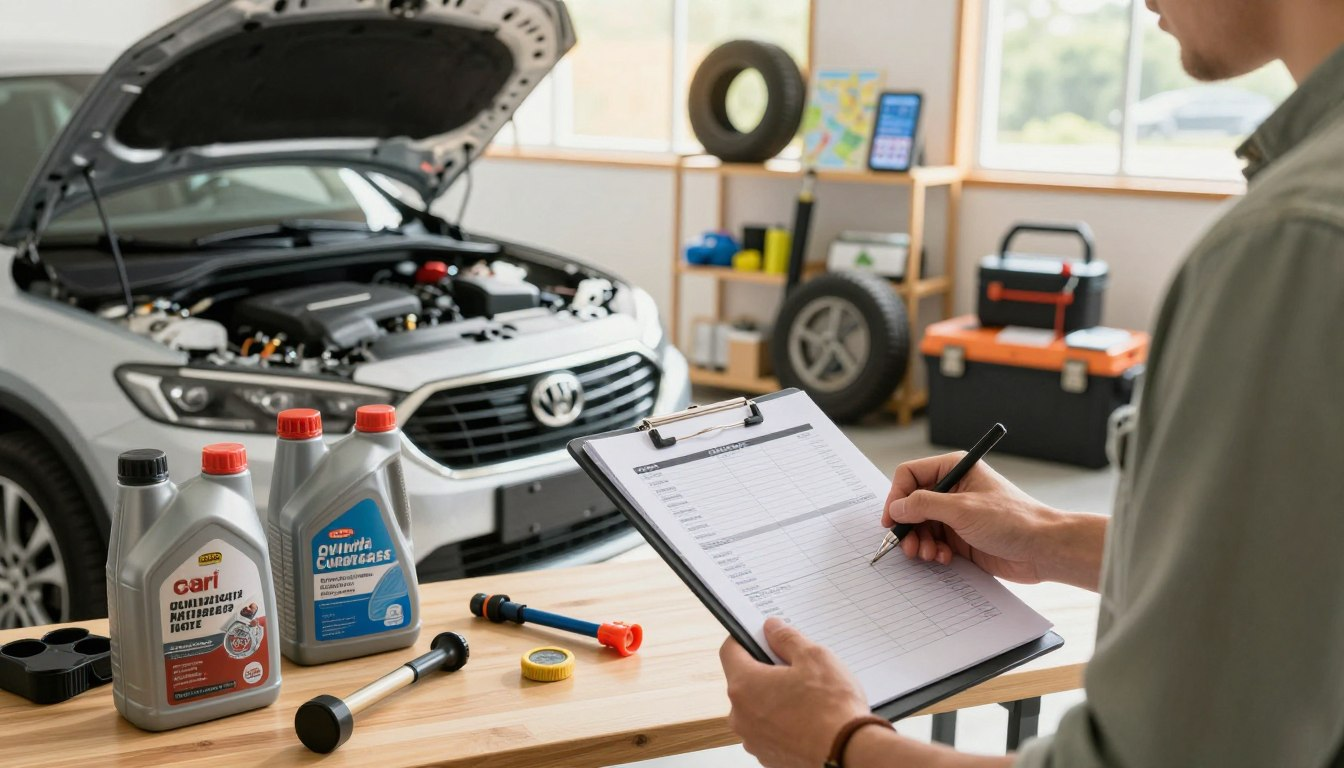
If you only have a few minutes, check these first:
- Tire pressure, including the spare, using the door-jamb sticker pressure, not the maximum number molded on the tire sidewall. Check pressures when the tires are cold, meaning the car has been parked for several hours or has not been driven more than a very short distance. NHTSA says to check tire pressure when the tires are cold, and Consumer Reports gives the same advice. (NHTSA)
- Tire condition for nails, screws, sidewall bulges, deep cracks, exposed cords, or tread worn close to the wear bars. NHTSA says to inspect tires before long road trips and replace tires with uneven wear or insufficient tread; it also notes that underinflation is a leading cause of tire failure. (NHTSA)
- Engine oil level on level ground. AAA recommends topping off engine oil and other fluids before summer travel. (AAA)
- Coolant level, but only when the engine is cool. NHTSA specifically says to inspect the cooling system before a long trip because overheating is one of the common trip-ending failures. (NHTSA)
- Brake fluid level. AAA’s maintenance guidance includes brake fluid among the fluids that should be inspected before a trip. (AAA)
- Windshield washer fluid and wiper blades. NHTSA and AAA both recommend checking washer fluid and replacing worn wipers before travel. (NHTSA)
- Exterior lights, including brake lights, turn signals, hazards, and headlights. NHTSA includes lights in its pre-trip checklist. (NHTSA)
- Battery condition, especially if the car has been slow to crank or the battery is older. AAA recommends securing and testing the battery before travel. (AAA)
- A short test drive to confirm that the brakes feel normal, the steering is centered, the car does not vibrate oddly, and no new warning lights appear. AAA says to listen to and feel the brakes as part of pre-trip preparation. (AAA)
Tires deserve extra attention
Tires are the easiest place for a minor oversight to become a major roadside problem. NHTSA says to inspect your tires at least once a month and before long road trips, and to check the spare as well. It also says tread should be at least 2/32 of an inch and that uneven wear can signal other issues such as alignment trouble. (NHTSA)
A more useful tire check includes four things:
- Cold pressure set to the vehicle placard. NHTSA says the correct pressure is found in the owner’s manual and on the placard located on the driver’s door frame or door edge. (NHTSA)
- Tread depth above the wear bars, with more caution if you expect rain. Consumer Reports and NHTSA both emphasize checking tread before a trip. (Consumer Reports)
- Sidewall condition, especially bulges or impact damage, which should be treated as a no-go for a long trip. Consumer Reports’ tire-safety guidance recommends looking closely for damage before travel. (Consumer Reports)
- Spare tire and tools, including the jack, lug wrench, and locking-wheel key if your car uses one. NHTSA says to check the spare before a long trip. (NHTSA)
A useful internal link here would be your tire pressure guide or how to inspect tire tread article.
Fluids: check the basics, not everything under the sun
You do not need to become a mechanic before a road trip. You just need to catch obvious low levels or leak clues.
- Engine oil: check on level ground and top up only with the correct oil spec from the owner’s manual. AAA recommends topping off engine oil before travel. (AAA)
- Coolant: only inspect the reservoir when the engine is cool. NHTSA includes the cooling system in its road-trip checklist because overheating is a common travel problem. (NHTSA)
- Brake fluid: if it is low, do not dismiss it. AAA includes brake fluid among the fluids worth checking before travel. (AAA)
- Power steering fluid: only if your vehicle actually uses hydraulic power steering. Many newer vehicles use electric power steering and have no serviceable reservoir. AAA notes that not every car uses all six common vehicle fluids. (AAA)
- Transmission fluid: only if the vehicle is owner-checkable or your manual specifically instructs you how. Many newer vehicles do not have a normal user-serviceable dipstick. That is why the manual matters. (AAA)
- Windshield washer fluid: top it up. NHTSA includes washer fluid in its pre-trip guidance because highway grime and bugs can reduce visibility quickly. (NHTSA)
Battery, lights, and visibility checks
AAA recommends checking the battery before a summer trip, and NHTSA includes both batteries and lights in its trip-prep checklist. A battery that seems fine at home can fail after a fuel stop in high heat or cold weather, which is why slow cranking, dimming lights, or corrosion at the terminals should be treated as pre-trip inspection items rather than afterthoughts. (AAA)
Visibility matters just as much as mechanical reliability. NHTSA and the National Safety Council both point drivers to lights, windshield wipers, and washer fluid as basic maintenance and pre-drive checks. If the wipers smear, chatter, or skip after cleaning the glass, replace them before you go. (NHTSA)
One small but high-value step: clean the inside of the windshield too. That reduces glare at night and helps the defroster work more effectively. That point is practical advice rather than a recall or regulation, but it improves real-world visibility.
What to pack without turning the trunk into a garage
A good emergency kit is about likely problems, not maximum gear.
A sensible minimum kit includes:
- phone charger and power bank
- jump pack or jumper cables
- flashlight or headlamp
- reflective triangle or other legal roadside warning device
- basic first aid kit and personal medications
- water and a few shelf-stable snacks
That list lines up with the most common roadside scenarios: dead battery, low visibility while waiting for help, and being stuck longer than expected. NHTSA’s stranded-driver guidance also emphasizes moving safely off the road, using flashers, and summoning help rather than trying risky roadside improvisation. (National Safety Council)
A more useful step up from the minimum kit is:
- small tire inflator
- tire pressure gauge
- work gloves
- compact tool kit
- duct tape or zip ties for temporary non-safety fixes
- blanket or extra layers, depending on season
Useful app categories before you leave
The article does not need to recommend specific brand-name apps to be useful. The more durable advice is to have these categories covered before you leave:
- navigation with live traffic
- offline maps if your route includes weak-signal areas
- weather
- fuel-price finder
- roadside assistance if your insurer, auto club, or manufacturer provides it
Also save your policy numbers, roadside-assistance number, and emergency contacts somewhere accessible even if cell service is weak.
When to stop DIY and get a shop inspection
DIY checks are fine for the basics. A professional inspection makes more sense if you notice:
- a brake warning light, soft pedal, grinding, or pulling under braking
- overheating, coolant loss, or a sweet smell under the hood
- a check-engine light, especially if the engine runs rough
- steering vibration, clunks, or drifting
- tire bulges, exposed cords, or very low tread
AAA and NHTSA both make the same broader point: routine maintenance and pre-trip safety checks help prevent breakdowns, but warning signs that affect braking, steering, overheating, or tire integrity should be handled before the trip rather than ignored. (AAA)
Bottom line
A good road-trip check is not about overpacking or obsessing over every system. It is about checking the few items most likely to cause delays or safety problems: tires, fluids, battery, lights, wipers, and how the car actually feels on a short drive. NHTSA and AAA both focus on those same basics before long trips. (NHTSA)
If anything feels off — especially brakes, steering, overheating, or visible tire damage — fix it before you go. That is usually cheaper than a tow and much safer than hoping the problem stays small.
References
- NHTSA, Summer Driving & Road Trip Tips — tires, cooling system, fluid levels, batteries, lights, wiper blades, and floor mats. (NHTSA)
- NHTSA, Summer Driving Tips PDF — check tires before long road trips, check the spare, tread should be at least 2/32 inch, underinflation is a leading cause of tire failure. (NHTSA)
- AAA Automotive, Prepare Your Car for Summer Travel — tires, brakes, battery, fluids, and wipers. (AAA)
- AAA, Time-Stamped Car Maintenance Checklist — brake fluid, coolant, washer fluid, and battery-cable checks. (AAA)
- Consumer Reports, Tire Safety Checklist — check tire pressure when cold and check the spare before a road trip. (Consumer Reports)
- National Safety Council, Basic Vehicle Maintenance and Pre-Drive Checklist — lights, wipers, washer fluid, tire pressure, oil, and coolant. ( Categories Driving Tips & Road Trip Prep