By Gustavoblalmiras
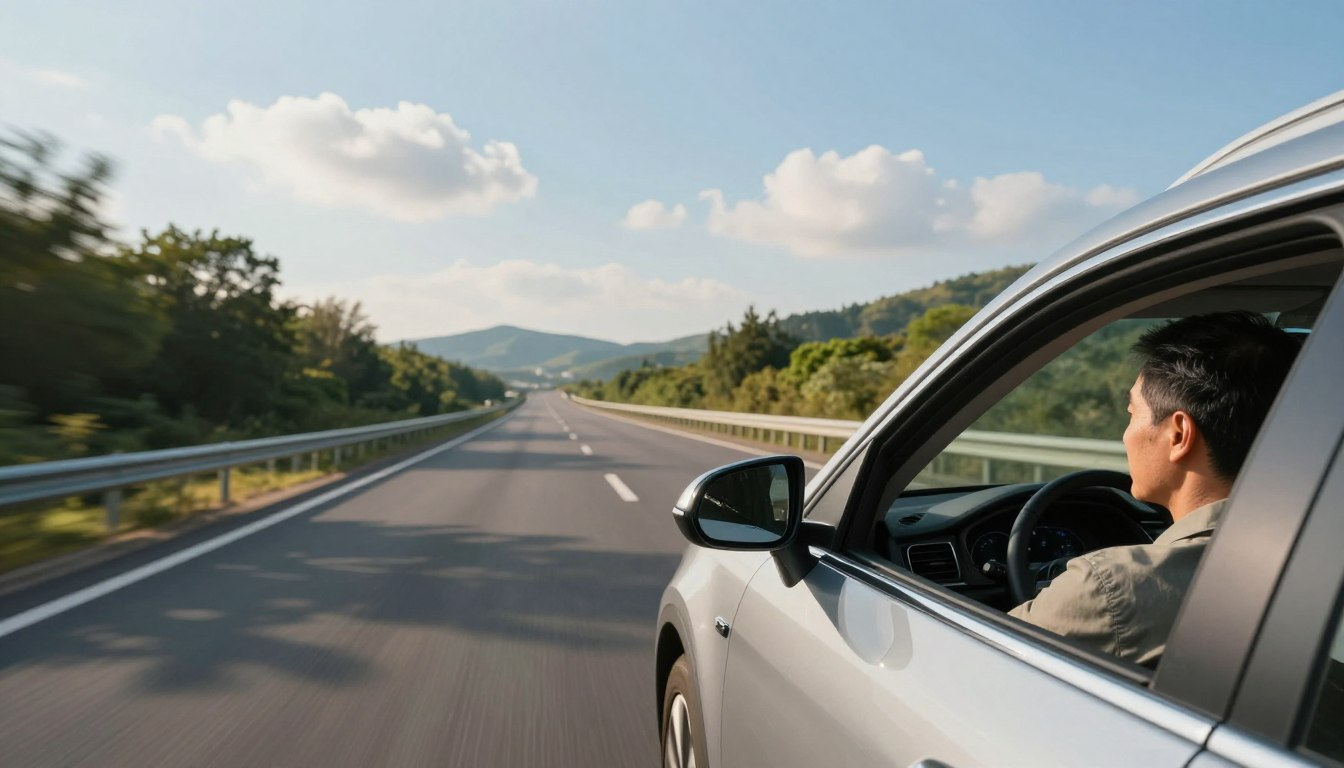
Cruise control can save fuel — but only when the road allows it. On flat motorways/highways, it helps you hold a steady speed, reducing the small speed changes that quietly burn extra fuel.
This is only for educational purposes.
Safety first: Don’t use cruise control when grip or traffic can change suddenly (rain/wet roads, ice, heavy traffic, construction zones, tight curves, or steep hills). AAA specifically advises not using cruise control on wet roads. If cruise makes the car feel less controllable, switch it off immediately.
Quick answer: when cruise control helps (and when it doesn’t)
- Use cruise control when: road is dry, traffic is light and flowing, and the route is flat enough that you won’t be braking or adjusting speed constantly.
- Turn it OFF when: wet/icy conditions, stop-and-go traffic, busy merges, winding roads, construction, or steep hills/mountains.
- If you’re braking or tapping +/– all the time, cruise control isn’t saving fuel — it’s just adding workload.
| Best time to use it | Avoid using it |
|---|---|
| Flat motorway/highway | Rain / wet / ice |
| Long open stretches | Stop-and-go traffic |
| Light traffic | Steep hills / mountains |
| Dry conditions | Curves / winding roads |
| You can set speed and leave it | Busy merges / short gaps |
Why cruise control can save fuel
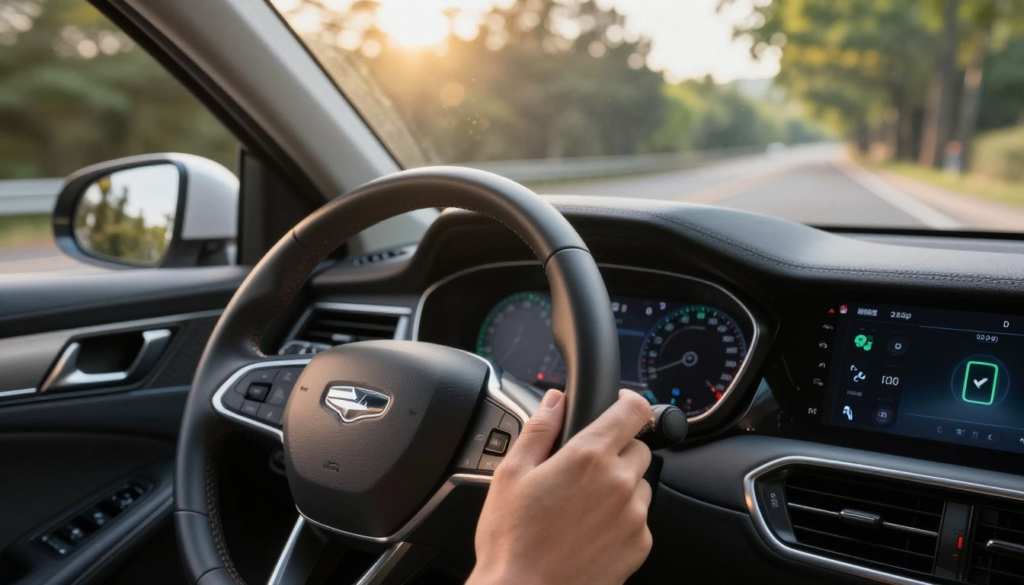
Cruise control saves fuel mainly by reducing unnecessary micro-accelerations. Many drivers “creep” faster over time on open roads, then brake when they catch traffic. Cruise control prevents that drift by holding one steady pace.
DOE/AFDC guidance explains it simply: using cruise control on the highway helps maintain a constant speed and, in most cases, will save gas.
How to use cruise control for fuel savings (simple method)
- Accelerate smoothly to your target speed first (don’t floor it and then lock cruise).
- Set cruise slightly below your “temptation speed” (example: if you tend to drift above the limit, set 1–2 mph lower).
- Increase following distance so you don’t brake. Braking destroys the savings because you must re-accelerate again.
- Avoid constant +/– adjustments. If you’re adjusting every minute, the road isn’t right for cruise.
- On gentle rolling hills, if safe and legal, allow small speed variation rather than forcing perfect speed (perfect speed on hills can increase throttle).
The safety triggers: when to switch it OFF immediately
- Wet roads / rain / standing water (higher risk of losing traction; AAA advises not using cruise control on wet roads).
- Ice/snow/fog or any condition where you may need quick speed changes.
- Stop-and-go traffic where you’re braking repeatedly.
- Construction zones with sudden lane shifts or changing speed limits.
- Winding roads where speed and steering need frequent corrections.
- Steep hills/mountains where cruise keeps adding throttle uphill and can feel pushy downhill.
Hills: the fuel mistake most cruise-control users make
Cruise control does not “see” the hill ahead. On climbs, it often adds extra throttle to hold the exact set speed. On rolling terrain, that can cost fuel compared with a calm human driver who allows a small speed drop uphill and recovers naturally downhill.
The RAC explains this idea clearly: cruise control helps on flat motorways, but it can be less efficient on roads with gradients because it reacts slower to slope changes and can keep power on longer than needed.
Practical rule:
- Steep grades: drive manually.
- Gentle rollers: cruise may be fine, but if you feel surging (throttle on/off), switch to manual and drive smoothly.
Adaptive Cruise Control (ACC): can it save fuel or waste it?
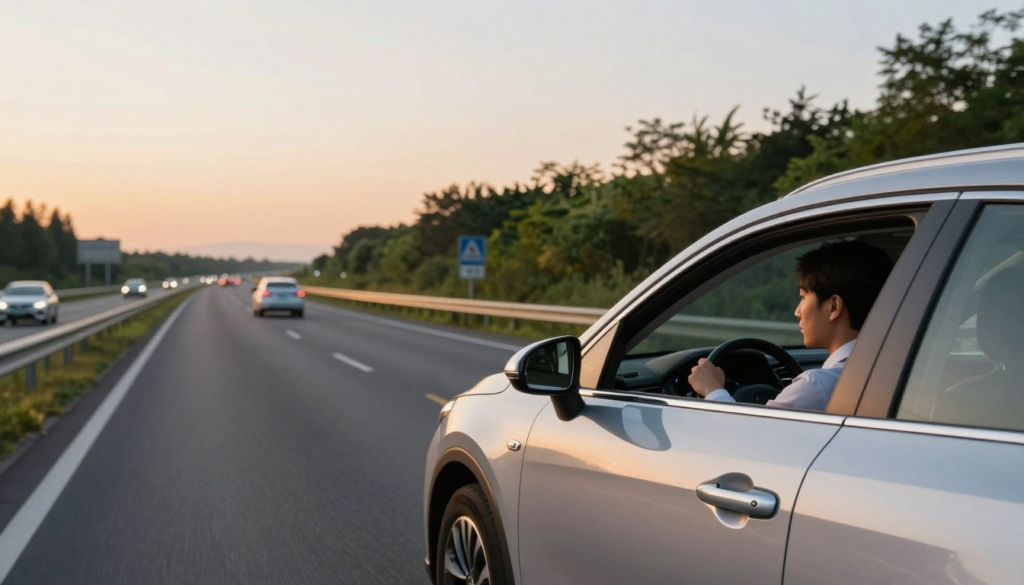
ACC is mainly a comfort/safety feature. In light traffic it can be smooth and efficient. In denser traffic, some systems brake and re-accelerate more than a calm driver would, which can reduce fuel economy.
ACC settings that usually help efficiency:
- Use a longer following gap so the car doesn’t brake hard and re-accelerate often.
- Avoid ACC in “accordion traffic” where speeds constantly swing.
- If the car feels like it’s braking too much, take over manually and drive smoother.
How to measure savings on your own car (2 quick tests)
Test A: Same route, two runs
- Pick a flat highway section you can repeat.
- Do Run 1: cruise ON for 10–20 minutes.
- Do Run 2 (another day): cruise OFF, but hold the same steady speed style.
- Compare average MPG/consumption (and note wind + traffic).
Test B: Hill reality check
- Choose a rolling route.
- Drive it once with cruise ON (note if the car surges uphill).
- Drive it once manually with smooth throttle and small speed variation.
- Compare which run uses less fuel and feels calmer.
Combine cruise control with the “big wins” (so your results are real)
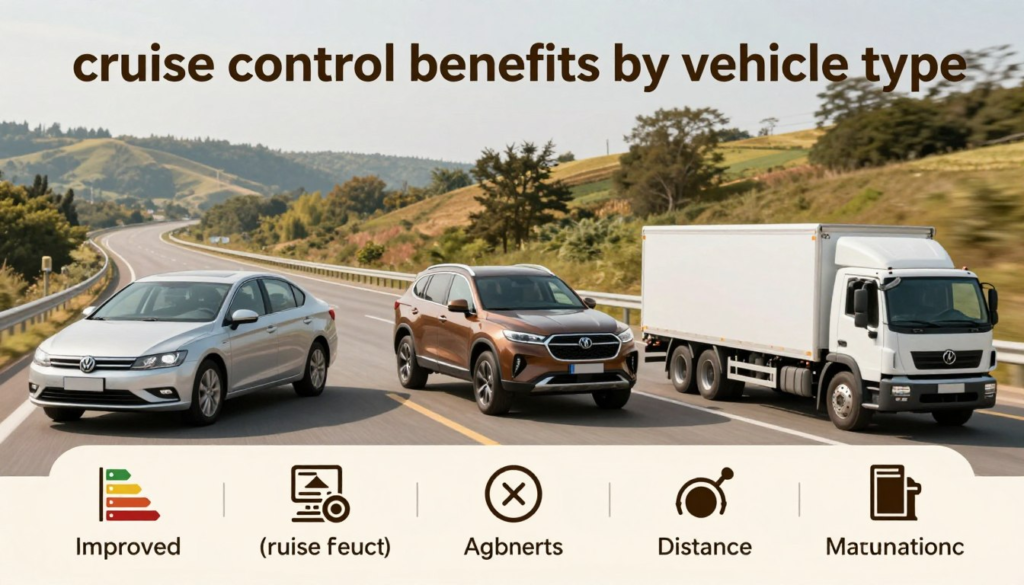
Cruise control helps most when you remove the other big MPG killers. For example, AFDC notes roof cargo can reduce fuel economy significantly at highway speeds, and their guidance also includes cruise control as a fuel-saving habit on the highway.
- Remove roof racks/boxes when not needed (big highway impact).
- Keep tyres at the door-sticker pressure (saves fuel and improves safety).
- Drive smoothly: fewer unnecessary accelerations and late braking.
Common mistakes that kill cruise-control fuel savings
- Using cruise in traffic and braking repeatedly.
- Using cruise in rain (safety risk; also not efficient if you must constantly react).
- Forcing exact speed on hills while the car surges the throttle.
- Following too closely so you must brake and re-accelerate.
Conclusion
Cruise control is a tool — not a fuel “hack.” Use it on flat, dry highways where it can hold a steady pace, and switch it off when conditions change (wet roads, traffic, steep grades). If you want the real answer for your car, run the simple A/B test on a repeatable route — then you’ll know exactly when cruise helps, and when manual driving is better.
FAQ
1) Does cruise control always save fuel?
No. It helps most on flat highways. In traffic or steep hills, it can waste fuel because of braking and extra throttle.
2) Is cruise control safe on wet roads?
Generally no. AAA advises not using cruise control on wet roads because the chance of losing control increases.
3) Why can cruise control waste fuel on hills?
Because it tries to hold the exact speed by adding throttle uphill, instead of allowing a small speed drop like a human driver might.
4) Does adaptive cruise control save fuel?
Sometimes in light traffic. In changing traffic it can brake and re-accelerate more than a calm driver, lowering MPG.
Sources
DOE/AFDC Gas-Saving Tips (cruise control, roof cargo impacts): https://afdc.energy.gov/files/u/publication/gas_saving_tips_2015.pdf
AAA advice for driving in wet weather (don’t use cruise control): https://newsroom.acg.aaa.com/aaas-advice-for-driving-in-wet-weather/
RAC fuel-saving tips (cruise helps mainly on flat motorways; hills can reduce efficiency): https://www.rac.co.uk/drive/advice/how-to/fuel-saving-tips/