By Gustavoblalmiras
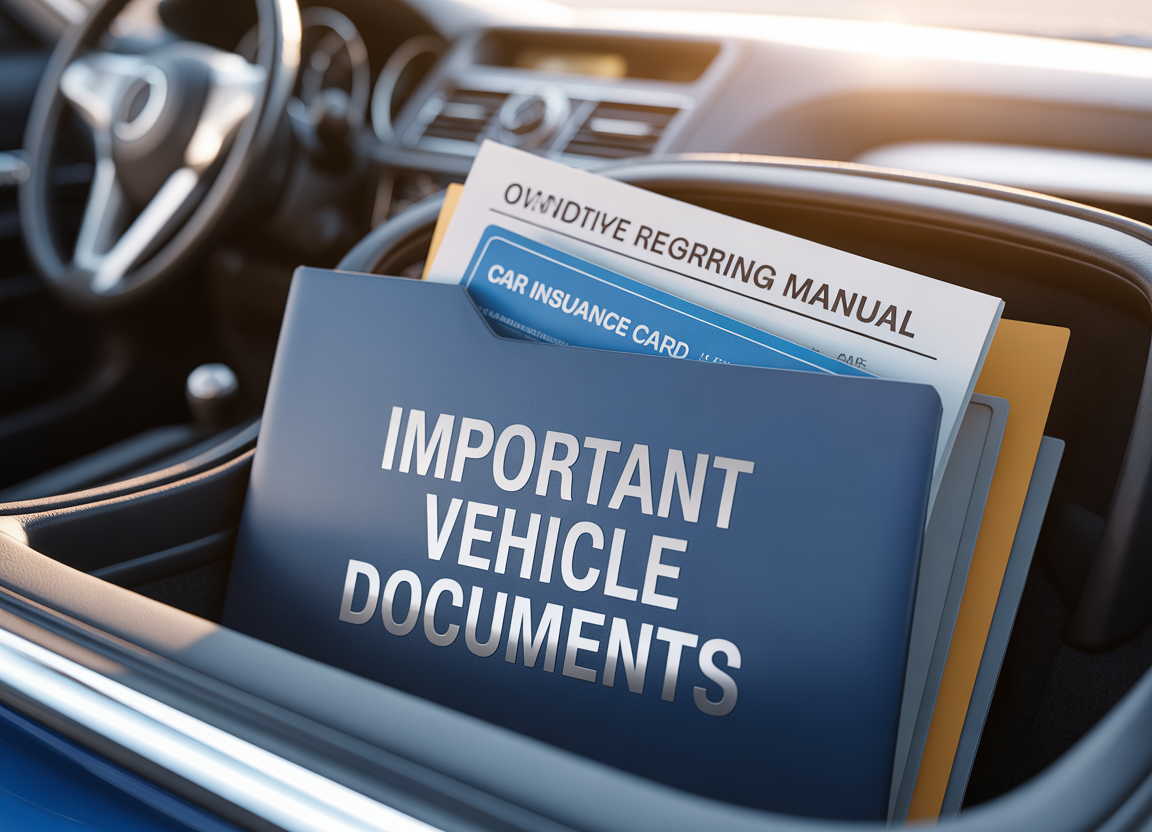
Keeping the right documents in your glovebox saves time during traffic stops, accidents, and breakdowns. The goal isn’t to store everything — just the papers you might need fast. Use this checklist, and keep sensitive originals at home for security.
This is only for educational purposes.
Note: Document requirements vary by location and situation (personal vs commercial use). Always follow your local rules and your insurer’s guidance.
Glovebox checklist (keep these in the car)
- Vehicle registration (current)
- Proof of insurance (paper card + digital copy if your area accepts it)
- Roadside assistance info (provider number + member ID/policy number)
- Emergency contacts + medical info card (ICE)
- Accident info sheet (what to do + what to collect)
- Owner’s manual / quick guide (or a printed “quick specs” page)
Don’t keep these in the glovebox
- Vehicle title (store at home)
- Passport, SSN card, banking info, spare house keys (theft risk)
- Your driver’s license (keep it on you)
Essential Glovebox Documents to Keep in the Car
Your glovebox is the “grab-it-fast” spot. Keep only what helps you prove legality, get help quickly, and handle an accident without digging through your phone or searching your email under stress.
1) Vehicle Registration (and where your title should live)
Your registration proves your vehicle is currently registered and is commonly requested during traffic stops, parking/impound issues, and after a crash.
- Keep: current registration in the glovebox (or a location your manual recommends)
- Don’t keep: the title in the car (store at home in a secure place)
Quick tip: When you renew registration, swap the old copy the same day. Expired paperwork is one of the most common “avoidable hassles.”
2) Proof of Insurance (paper vs digital)
Your insurance card (or proof page) contains the exact details you’ll need after an incident: insurer name, policy number, effective dates, and claims contact instructions.
Best setup:
- Keep a paper card or printed proof in the glovebox
- Keep a digital copy on your phone as backup (offline if possible)
Why paper still matters: Not every area accepts digital proof, and a dead phone (or no signal) is common during breakdowns. Paper is the “works anywhere” backup.
3) Roadside Assistance Info (so you don’t search during stress)
If you have roadside coverage (through AAA, your insurer, a credit card, or your vehicle brand), store the essentials where you can grab them immediately:
- Phone number (and/or the app name + login hint)
- Member ID / policy number
- Plan limits (example: towing distance, lockout rules, fuel delivery)
Extra helpful: Write your vehicle’s exact year/make/model and color on the roadside card. When you’re stressed, you’ll give faster, clearer info.
4) ICE Card (Emergency Contacts + Medical Info)
This is one of the most useful real-world items to keep in the car. If you’re hurt, shaken up, or your phone is locked, a simple card helps responders or a good Samaritan contact the right people.
ICE card template (copy/paste):
- Name + DOB:
- Emergency contact #1: (name, relationship, phone)
- Emergency contact #2: (name, relationship, phone)
- Medical conditions: (brief, if any)
- Medications: (optional, brief)
- Allergies: (medications/foods)
Keep it short: the goal is readability in 5 seconds, not a full medical file.
5) Accident Info Sheet (the one-page lifesaver)
This is the page you grab right after a crash to stay calm and organized. It prevents the common “I forgot to take photos / I didn’t get witness info” problem.
Accident info sheet (printable template)
Keep this as a single page in your glovebox folder:
- Safety first: move to a safer spot if possible; turn on hazards; call emergency services if anyone is hurt or traffic is unsafe.
- Photos: damage, license plates, vehicle positions, road signs, and the wider scene.
- Exchange: driver name, phone, license (if required/allowed), vehicle plate, insurer, policy number.
- Witnesses: names + numbers (even one witness helps).
- Notes: time, exact location, weather, and a short “what happened” summary.
- Next: contact your insurer/claims line and follow their instructions.
Tip: Keep a pen in the glovebox folder. Phones die, screens crack, and stress makes typing slower.
6) Owner’s Manual or a “Quick Specs” Page
You don’t need the whole manual, but quick reference info can save a lot of time during a flat tire, dead battery, or warning light.
Good option: print a 1-page “quick specs” sheet with:
- Tire pressures (front/rear PSI)
- Oil type and capacity
- Jack points and spare tire location
- Tow hook location (if relevant)
- Fuse basics (or fuse box diagram reference)
Organizing Your Glovebox Documents (simple system)
The easiest way to keep this clean is to treat your glovebox like a “mini folder,” not a junk drawer.
- Use a slim document holder or zip sleeve (water-resistant is a plus)
- Put insurance + registration in front (most requested)
- Keep the ICE card and accident sheet behind those
- Review twice a year (spring/fall): remove expired cards and old paperwork
Digital Alternatives (useful, but don’t rely on digital-only)
Digital copies are great as backup. Store them in a secure place (cloud storage with 2-factor authentication or a locked notes app). Make sure you can access at least one copy offline in case you have no signal.
Privacy tip: If your phone is lost or stolen, digital documents can become an identity risk. Use a strong passcode and keep sensitive files in a locked area rather than your camera roll.
Security and Privacy (don’t make your car a target)
Cars get broken into. The goal is to avoid turning a minor theft into an identity or financial nightmare.
- Don’t store identity or financial documents in the vehicle
- Don’t keep spare house keys in the glovebox
- Keep the glovebox folder minimal (only what you need fast)
- If your car is broken into and documents are stolen: contact your insurer, replace documents, and monitor accounts if anything sensitive was included
Bonus: 60-second “I got pulled over” reminder
If you’re stopped, the goal is to reduce stress and avoid frantic searching:
- Turn on interior light at night (visibility helps everyone)
- Know where your glovebox folder is before you’re stressed
- Keep registration/insurance together in the front of the folder
Conclusion
A smart glovebox isn’t full — it’s ready. Keep only the documents you might need quickly (registration, insurance, roadside info, ICE card, accident sheet) and store sensitive originals at home. Update the folder when you renew insurance/registration, and you’ll be prepared without increasing theft risk.
FAQ
What documents do I legally need to keep in my car?
Commonly registration + proof of insurance, but requirements vary by location and situation. Check local rules.
Should I keep my car title in the glovebox?
No. Store the title at home in a secure place.
Is a digital insurance card on my phone acceptable?
Often yes, but not everywhere. Keep a paper backup in the car.
What’s the best way to organize glovebox documents?
Use a slim holder and keep only “need-it-fast” papers—insurance and registration in front.
What should I do after an accident (document-wise)?
Use an accident info sheet: take photos, exchange details, record witnesses, and contact your insurer/roadside support.