By Gustavoblalmiras
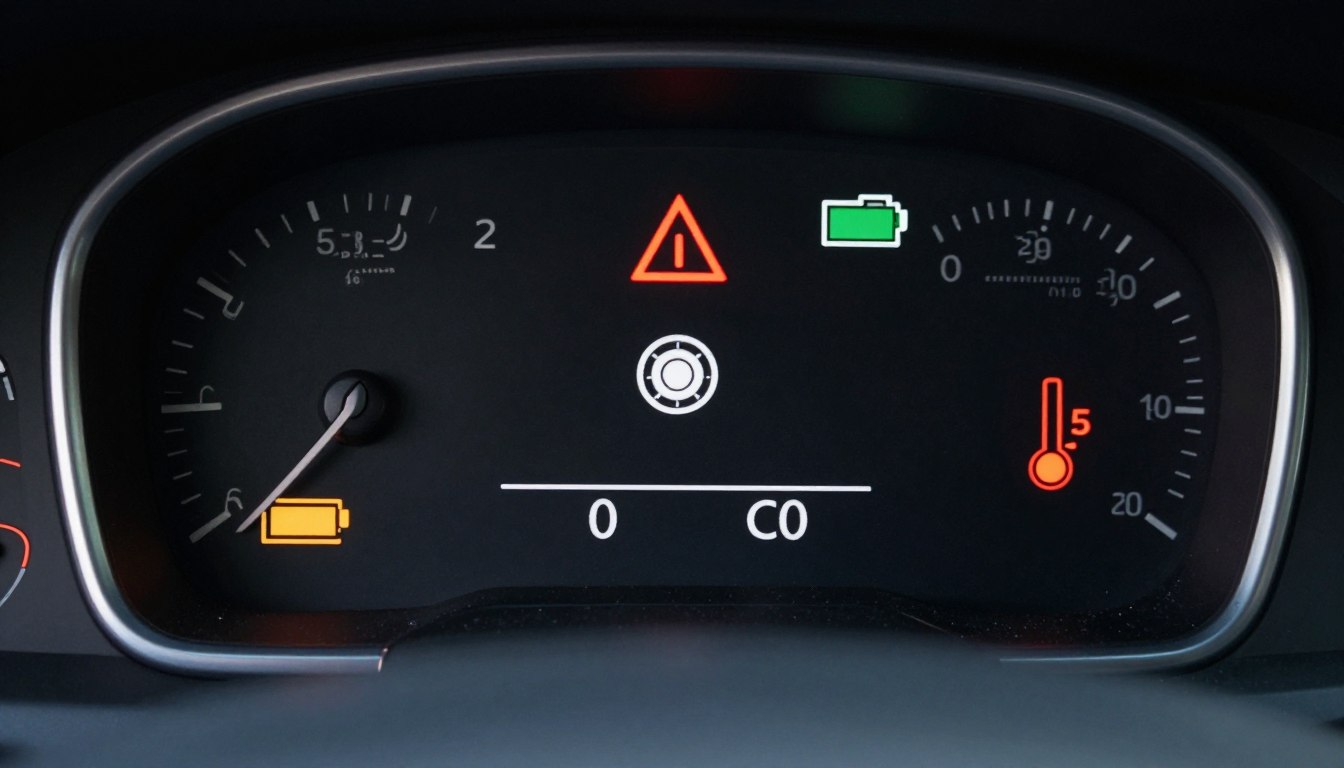
Dashboard warning lights are your car’s way of telling you what needs attention. This beginner-friendly guide explains what the most common lights mean and what to do next—based on the light color (red/amber/green) and the symbol.
This is only for educational purposes.
Important: Warning symbols and urgency can vary by brand and model. When in doubt, use this guide to make a safe decision (stop vs. continue carefully), then confirm details in your owner’s manual or with a qualified technician.
Quick safety rule (read this first)
- Green/Blue lights: usually informational (a system is ON), not a fault.
- Amber/Yellow lights: you can usually keep driving carefully, but you should check/scan/fix soon.
- Red lights: stop safely ASAP—continuing can be unsafe or cause damage.
- Flashing red or a flashing check-engine light: treat as urgent. Reduce speed, avoid hard acceleration, and stop driving if the car shakes, misfires, overheats, or feels unsafe.
What to do the moment a warning light appears (60 seconds)
- Stay calm and keep control. Don’t slam brakes or swerve.
- Check your gauges (temperature gauge, oil pressure gauge if you have one, fuel level) and listen/feel for anything abnormal (shaking, power loss, burning smell).
- Look at the color (red vs amber) and whether it’s flashing.
- If it’s red or the car feels unsafe: signal, pull over somewhere safe, and turn hazards on.
- Take a quick photo of the dashboard (helps later), then check your owner’s manual warning-light section.
Golden rule: If you’re thinking “Should I stop?”—choose the safer option and stop in a safe place. A tow is cheaper than an engine or a crash.
The dashboard lights beginners search most (meaning + what to do)
| Light (common name) | Meaning (simple) | What to do now |
|---|---|---|
| Oil pressure (red) | Engine may not be getting oil pressure (damage can happen fast) | Stop safely. Turn engine off. Check oil level when safe. If level is OK and light stays on: do not drive—get help/tow. |
| Engine temperature (red) | Engine overheating | Stop safely. Turn off engine. Wait 15–30 minutes. Never open a hot radiator cap. Check coolant only after cooling. If it returns: get assistance. |
| Brake system (red) | Brake fault / low brake fluid / parking brake issue | Stop safely. Confirm parking brake is fully released. If pedal feels soft/low or braking feels wrong: don’t drive—call assistance. |
| Battery/charging (red) | Charging problem (battery may drain soon) | Turn off non-essential electrics (heated seats, rear defrost). Drive to a safe place/mechanic ASAP. If lights dim or steering gets heavy, stop safely. |
| Check engine (amber) | Engine/emissions fault (minor to serious) | Tighten gas cap (if applicable). If it stays on: scan OBD2 code. If it’s flashing or car runs rough: reduce speed and stop soon. |
| ABS (amber) | ABS not working (normal brakes usually still work) | Drive gently, allow longer stopping distance, avoid hard braking on wet/ice, repair soon. |
| Traction/Stability control (amber) | System off or fault (or it’s actively working if flashing) | If steady: drive carefully (especially in rain/snow) and scan soon. If flashing while accelerating: ease off—system is correcting wheel slip. |
| TPMS / tire pressure (amber) | Low tire pressure or sensor issue | Check pressures with a gauge and inflate to door-sticker PSI. If it returns in 1–3 days, inspect for puncture/slow leak. |
| Power steering (amber/red) | Steering assist reduced or fault | If steering suddenly feels heavy: slow down, pull over safely, and get help. Don’t continue if steering is unsafe. |
| Transmission temp / gearbox (amber/red) | Transmission overheating or fault | Reduce load, pull over safely if needed, let it cool. If it repeats: service inspection—don’t keep forcing it. |
| Fuel (amber) | Low fuel (near reserve) | Refuel soon. Repeated near-empty driving can strain the fuel system in some vehicles. |
| Washer fluid (amber) | Washer fluid low | Top up washer fluid (visibility = safety). |
Red warning lights (stop driving / urgent)
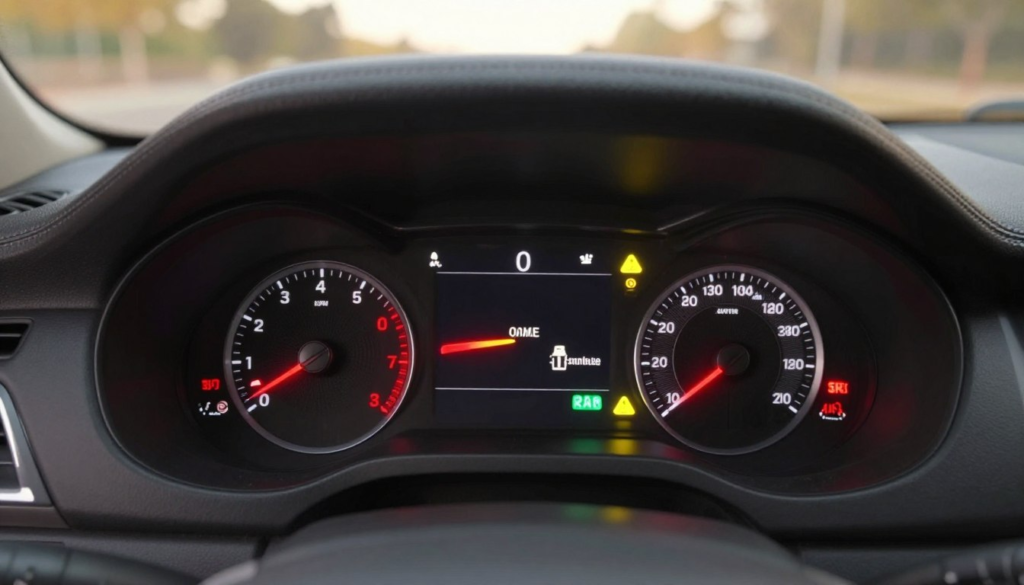
Red lights are the “don’t negotiate” category. Even if the car still moves, red warnings can mean immediate safety risk or rapid damage. Your goal is to stop safely—not to “make it home.”
1) Oil pressure warning (red oil can)
What it usually means: The engine may not be building oil pressure. That can happen from low oil level, a failed oil pump, a blocked pickup screen, the wrong oil filter, or an electrical sensor problem—but you must treat it as serious until proven otherwise.
What to do:
- Signal and pull over safely, then turn the engine off.
- Check the oil level when safe (on level ground, after a few minutes).
- If oil is low, top up only if you know the correct oil and you can do it safely.
- If oil level is normal and the red oil light stays on: do not drive. Call for assistance/tow.
Why it’s urgent: Low oil pressure can damage an engine quickly. A tow is annoying; an engine replacement is worse.
2) Engine temperature warning (red thermometer)
What it usually means: The engine is overheating (low coolant, coolant leak, failed fan, thermostat issue, water pump issue, radiator blockage, etc.).
What to do safely:
- Pull over safely and turn the engine off.
- Wait 15–30 minutes to cool down.
- Do not open a hot radiator cap or coolant reservoir if it’s pressurized—hot coolant can cause burns.
- If coolant is low (after cooling) and you can safely top up with the correct coolant/water per manual, do so. If it overheats again: stop and get help.
3) Brake system warning (red circle/“!” or “BRAKE”)
What it could be: Parking brake engaged, low brake fluid, or a brake system fault. Because the brakes are a primary safety system, treat this seriously.
What to do:
- Confirm the parking brake is fully released.
- If the brake pedal feels soft, sinks, or braking feels different: stop and do not continue.
- If everything feels normal but the light stays on, get it checked immediately—don’t “wait until next month.”
4) Battery/charging warning (red battery)
What it means: The car may be running only on battery power and could die once the battery drains. Some vehicles also lose power steering assist or enter limp mode when voltage drops.
What to do: Turn off non-essential electrical loads, avoid stopping in unsafe areas, and head to a safe location/mechanic. If lights dim severely or systems fail, pull over and call for assistance.
Amber warning lights (usually okay to drive gently, but fix soon)
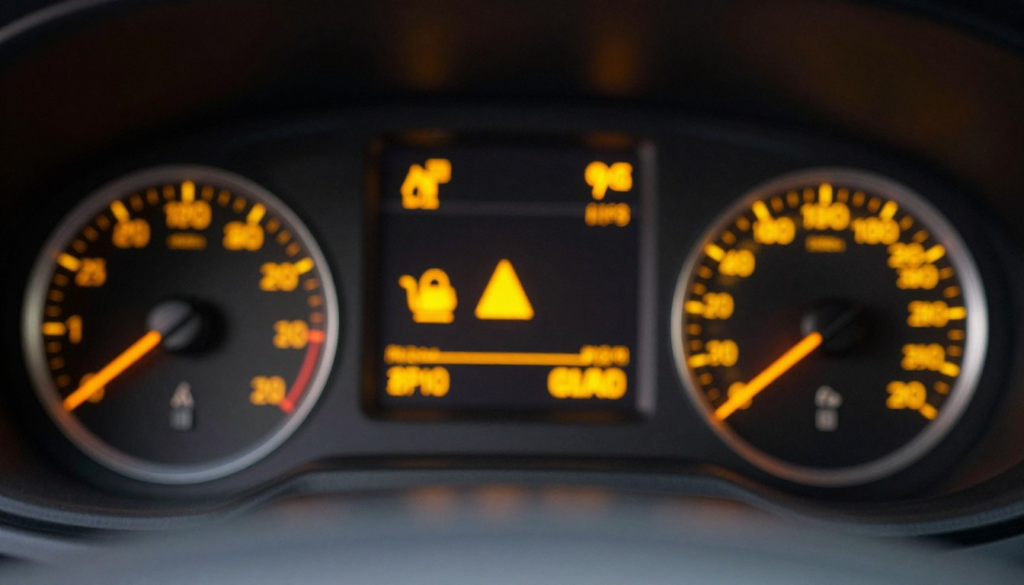
Amber lights are often “degraded mode” alerts: the car usually still drives, but a system may be limited or not working. The safest approach is to drive gently, avoid long trips until diagnosed, and scan codes if the light stays on.
Check engine light (CEL): steady vs flashing
Steady CEL: Often means an emissions or engine-management issue. It might be as simple as a loose fuel cap (on some vehicles), or something that needs a scan (sensor fault, airflow issue, misfire history, etc.).
Flashing CEL: Treat as urgent—especially if the engine is shaking, power is low, or it feels like misfiring. Reduce speed, avoid hard acceleration, and stop driving if it runs rough. A flashing MIL commonly indicates an active problem that can cause further damage if you keep pushing the engine.
Best next step: Read the code with an OBD-II scanner (many parts stores will read codes, and inexpensive scanners work well). The code doesn’t automatically mean “replace a part”—it means “here’s the system that needs diagnosis.”
ABS light (amber)
What to expect: Your normal brakes usually still work, but ABS may not intervene during emergency braking. That means you should drive with extra space and avoid harsh braking—especially in wet, icy, or gravel conditions—until the fault is repaired.
Traction/Stability control light (amber or flashing)
If it flashes while accelerating: the system is actively limiting wheel slip. The “fix” is often your right foot—ease off and accelerate smoothly.
If it stays on constantly: the system may be off or faulted. You can often drive, but you’ve lost a safety assist that matters most in rain/snow. Scan and repair soon.
TPMS (tire pressure) light (amber)
TPMS is a warning system, not a maintenance plan. It may not trigger until pressure is significantly low—and it can’t tell you which tire is slowly leaking unless your car shows individual pressures.
What to do:
- Check all four tires with a gauge when cold.
- Inflate to the PSI on the door-jamb sticker (not the tire sidewall max).
- Recheck in 2–3 days. If one tire drops again, inspect for a puncture/slow leak.
Green and blue lights (usually normal “system on” indicators)
These typically aren’t faults—just information:
- Blue high-beam icon: high beams are on.
- Green headlight/fog icon: headlights or fog lights are on.
- Cruise control indicator: cruise is active or ready.
- Turn signal arrows: normal (if one arrow blinks fast, a turn-signal bulb may be out on many cars).
What if multiple warning lights come on at once?
Multiple lights can be scary, but it often happens for two common reasons:
- Low voltage (weak battery/charging fault) causing multiple systems to complain at once.
- One core fault (like a wheel speed sensor) triggering ABS + traction + stability warnings together.
How to prioritize:
- Red beats amber. If you have a red oil/temperature/brake warning, treat it as urgent and stop safely.
- How the car feels matters. If it shakes, overheats, loses power, smells like burning, or steering/braking changes—stop driving.
- If it’s multiple ambers and the car drives normally, drive gently and plan a scan/inspection soon.
Using an OBD-II scanner (beginner-friendly)
If the check engine light (or other warnings) stays on, an OBD-II scan is the fastest way to move from guessing to knowing.
What an OBD2 scan tells you (and what it doesn’t)
- It tells you: a fault code that points to a system/circuit (example: misfire detected, oxygen sensor circuit issue, EVAP leak suspected).
- It does NOT automatically tell you: which part to replace. Diagnosis may still be needed.
Safe “first scan” checklist
- Scan and write down the exact code(s) (example: P0302).
- Note when it happened: cold start, highway, rain, after fueling, after battery change.
- Only clear codes after you’ve recorded them (and ideally after fixing the cause). Clearing too early can hide useful clues.
Safety note: If the car is misfiring badly, overheating, or showing a red warning, scanning is not the priority—stopping safely is.
Common “false alarms” and simple checks (that are still worth doing)
After a battery change
It’s common for some vehicles to show temporary warnings after battery disconnects (systems re-learning, steering angle calibration, etc.). Check that the battery terminals are tight and clean. If warnings persist after a short drive, do an OBD2 scan to confirm what’s stored.
Cold weather mornings
Cold can drop tire pressure and expose weak batteries. If a light appears only on very cold mornings, still check the basics: tire pressure (with a gauge), battery terminals, and fluid levels.
Loose fuel cap (some cars)
On many gasoline cars, a loose or damaged fuel cap can trigger an emissions-related check engine light. Tighten it until it clicks. If the light remains after a couple of normal trips, scan codes—don’t assume it’s only the cap.
Printable mini cheat-sheet (copy/paste)
RED = stop safely ASAP (oil pressure, overheating, brake system).
AMBER = drive gently, scan/check soon (CEL, ABS, TPMS, traction).
GREEN/BLUE = information (system on).
FLASHING = treat as urgent—reduce speed/load; stop if the car runs rough or feels unsafe.
Video: dashboard warning lights explained
If you prefer video first, watch this quick overview, then use the table above.
Video: dashboard warning lights explained
Conclusion: staying safe and avoiding expensive mistakes
Dashboard lights aren’t “random icons”—they’re early warnings. The highest-value skill is not memorizing 100 symbols; it’s knowing how to react safely:
- Red: stop safely and protect the engine/brakes.
- Amber: drive gently, diagnose soon (often with an OBD2 scan).
- Green/Blue: usually informational.
If you’re ever unsure, the safest move is to pull over somewhere safe and consult your owner’s manual or call roadside assistance. Being cautious for 10 minutes beats being stranded for 3 hours.
FAQ
1) What does a flashing check engine light mean?
A flashing check engine light should be treated as urgent—especially if the engine shakes, stutters, or loses power. Reduce speed, avoid hard acceleration, and stop driving if it runs rough. Then get it scanned/diagnosed as soon as possible.
2) Can I drive with the ABS light on?
Often yes, because normal braking usually still works—but ABS may not help you during emergency braking. Drive gently, increase following distance, and repair soon, especially before wet/icy conditions.
3) Why did multiple dashboard lights turn on after a battery change?
Common causes include low voltage during the swap, a loose terminal, or systems needing recalibration. Tighten/clean terminals and drive normally for a short period. If lights remain, scan with an OBD2 reader to confirm what’s stored.
4) Does the TPMS light always mean a puncture?
No. It can be a temperature-related pressure drop, a slow leak, or a sensor issue. Inflate to the door-sticker PSI first. If it returns quickly (1–3 days) or one tire keeps dropping, inspect for a puncture/valve leak.
5) Can dashboard warning lights come on in cold weather?
Yes. Cold air lowers tire pressure and weak batteries struggle more in winter. If a light appears only on cold mornings and disappears later, still check tire PSI, battery terminals, and fluid levels.
Sources (high-quality references)
- Honda Owner’s Manual (example of MIL behavior): https://manuals.honda.co.uk/
- NHTSA / Federal rule text for TPMS standard (FMVSS 138): https://www.federalregister.gov/