
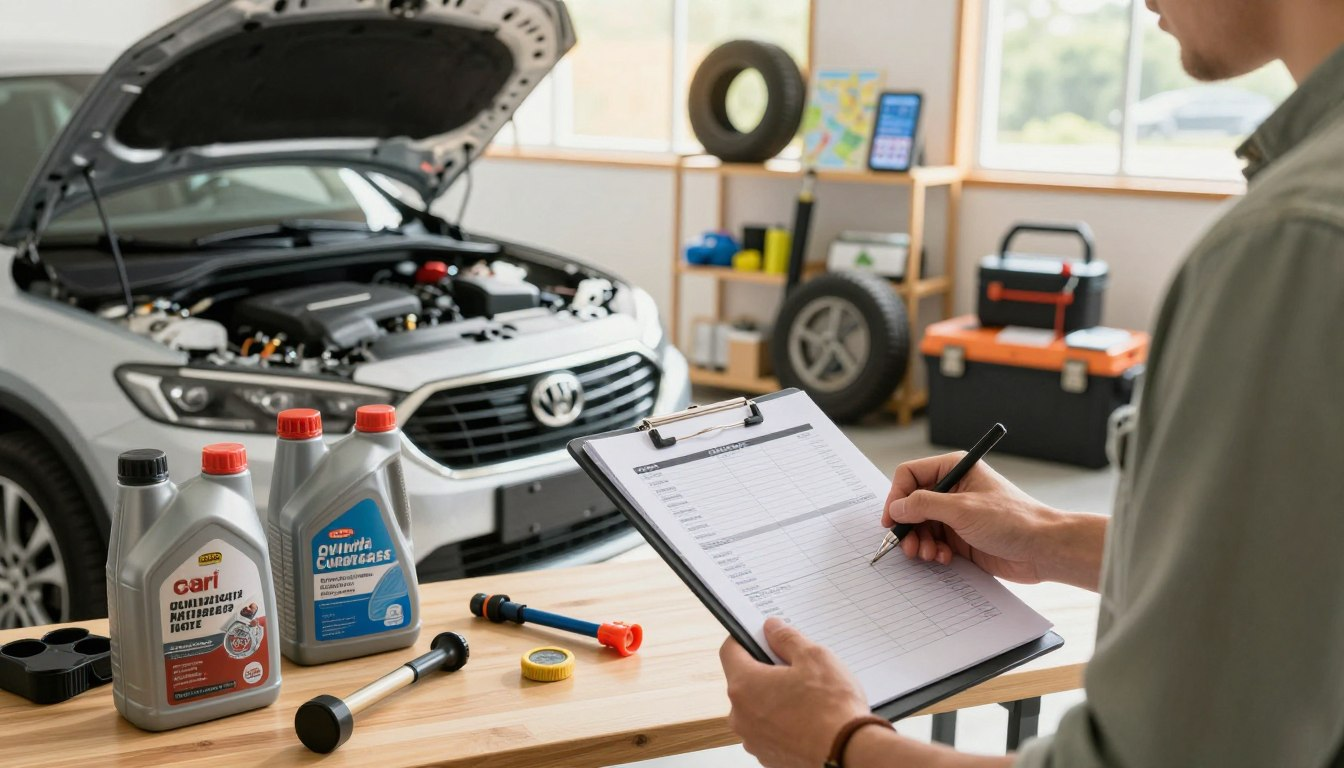
Going on a long drive is fun — until a simple issue (low tire pressure, old wipers, low oil, weak battery) turns into a roadside delay. This guide gives you a simple road trip car checklist you can do before you leave, plus the must-pack essentials that cover the most common problems.
In a few minutes, you’ll know:
- what to check under the hood (fluids)
- what to check on the ground (tires)
- what to pack for emergencies
- which apps help most on the road
Road Trip Car Checklist (10 minutes)
Before you leave:
- Check tire pressure (including spare)
- Quick tire look: tread + cracks + nails
- Engine oil level
- Coolant level (only when engine is cool)
- Brake fluid level
- Windshield washer fluid
- Lights: headlights, brake lights, turn signals
- Wipers: no streaking/skipping
- Battery terminals: tight + no corrosion
- Quick test drive: brakes feel normal, no pulling/vibration
Pack:
- phone charger + power bank
- jumper cables or jump pack
- flashlight + reflective triangle
- basic tool kit + duct tape
- first aid kit + any meds
- water + snacks (especially if remote driving)
Why vehicle prep matters (quick)
- Safer driving: Good tires, brakes, and lights reduce risk—especially in rain or at night.
- Fewer breakdowns: Most roadside problems come from tires, batteries, overheating, and low fluids.
- Cheaper than repairs: Fixing small issues before you leave usually costs far less than a tow + emergency repair.
Essential Fluid Checks Before Hitting the Road
Before you start your road trip, it’s important to check your vehicle’s fluids. This ensures your car runs smoothly and safely. Make sure all vital fluids are at the right levels to avoid breakdowns.
Engine Oil Level and Condition
First, check your engine oil level and condition. Engine oil is key for lubricating parts and keeping the engine cool. Use the right oil and check the level as your manual suggests.
Coolant/Antifreeze Status
Then, look at the coolant/antifreeze level. This fluid helps keep your engine at the right temperature. Make sure it’s at the right level and check its condition too.
Brake Fluid Inspection
Brake fluid is important for your brakes. Check its level and watch for leaks. Low brake fluid can make braking less effective, which is dangerous.
Power Steering Fluid (if your car has it)
Next, check the power steering fluid level. This ensures your steering is smooth. Low levels can make steering hard, mainly at slow speeds.
Transmission Fluid (only if your manual says it’s serviceable)
Transmission fluid is vital for your car’s transmission. Check its level and condition as your manual advises.
Windshield Washer Fluid
Lastly, make sure your windshield washer fluid is full. This is often forgotten but is key for clear visibility on your trip.
Top these up before you go so you don’t deal with overheating, warning lights, or poor braking on the road.
Tire Inspection and Maintenance Checklist
Checking your tires is key for a safe road trip. Look at pressure, tread depth, and condition. Good tires mean safer driving and fewer breakdowns.
Proper Tire Pressure Guidelines
Right tire pressure is important for your car’s performance and safety. Check your owner’s manual or the driver’s side doorjamb for the correct pressure. Make sure tires are cold before checking, as driving warms them up.
Tread Depth Measurement
Enough tread depth is critical for road grip, even on wet roads. Use a penny or tread depth gauge to check. If Lincoln’s head is visible, your tread is too low and needs to be replaced.
Signs of Uneven Wear or Damage
Look for uneven wear like feathering or bald spots. These can mean alignment or suspension problems. Also, check for cracks, bulges, or foreign objects in the tread.
| Signs | Possible Causes | Action |
|---|---|---|
| Uneven Wear | Misalignment, Improper Inflation | Check Alignment, Adjust Tire Pressure |
| Cracks, Bulges | Aging, Road Damage | Replace Tire |
Spare Tire Condition and Accessibility
Don’t overlook your spare tire. It should be in good shape, inflated, and easy to reach. You might need it unexpectedly.
By using this tire check list, you can avoid many road trip problems. This makes your trip safer and more fun.
Must-Have Tools and Emergency Equipment

Being ready for the unexpected is key to a stress-free road trip. This starts with the right equipment in your car. A well-prepared vehicle can save your life in emergencies, keeping you and your passengers safe.
Basic Tool Kit Essentials
A basic tool kit should have a spanner or wrench, screwdrivers, and pliers. These tools help with basic repairs and adjustments. Don’t forget duct tape and rope or twine for quick fixes.
Roadside Emergency Items
Roadside emergencies can be scary, but the right items help a lot. Pack jumper cables, a flashlight, and reflective triangles or flares to be seen. A spare tire and tools to change it are also key.
First Aid Kit Components
A first aid kit is essential for any road trip. It should have bandages, antiseptic wipes, pain relievers, and any needed medications. Always check the expiration dates before you go.
Weather-Specific Equipment
The weather can change suddenly, so being prepared is vital. For winter, pack ice scrapers, snow shovels, and warm blankets. For summer, bring sunscreen, hats, and hydration packs. Adjust your list based on the season and weather at your destination.
By packing these tools and emergency equipment, you’re set for a safe and fun road trip. It’s always better to be over-prepared.
Essential Mobile Apps for a Smooth Road Trip

Getting ready for your road trip? The right mobile apps can make a big difference. They help you plan, deal with emergencies, and enjoy your trip more.
Navigation and Traffic Apps
Navigation apps like Google Maps, Waze, and Apple Maps are key. They give real-time traffic updates, suggest better routes, and avoid traffic jams. For example, Waze uses community tips for traffic, police, and road issues.
Roadside Assistance Applications
Roadside apps like Allstate Motor Club and AAA are lifesavers. They offer towing, jump-starts, and fuel delivery. With these apps, you won’t be stuck for long.
Gas Station and Price Finder Apps
Finding cheap gas is easy with apps like GasBuddy and Waze. They save you money and show you where to fill up. This makes long trips more efficient.
Entertainment and Trip Planning Tools
For fun, try Spotify, Apple Music, and Audible. They have lots of music and audiobooks. Trip planning apps like Roadtrippers help plan your trip, book hotels, and find attractions.
Adding these apps to your road trip preparation checklist prepares you for anything. It makes your journey smoother and more fun.
Seasonal Considerations for Road Trip Preparation

Getting ready for a road trip means preparing your vehicle for the season. Each season has its own challenges that can impact your car’s performance and safety.
Summer Heat Precautions
In summer, your car might overheat. Make sure your coolant is at the right level and check your radiator for leaks. Also, check your tire pressure often because it can rise with the temperature.
Winter Weather Preparations
Winter can be tough on your vehicle. Ensure your battery is in good shape and think about using winter tires for better grip. Keep a winter emergency kit in your car, with a blanket, flashlight, and ice scraper.
Spring and Fall Maintenance Tips
In spring and fall, it’s a good time to check your vehicle’s fluids and belts. Look for wear and tear, and replace them if needed. Also, make sure your lights and signals are clean and working.
Regional Climate Adjustments
Adjust your preparations based on your trip’s destination. For example, if you’re heading to a coastal area, watch out for salt damage. In desert regions, be careful of sand and heat damage.
When to DIY vs. Seek Professional Help
Knowing when to DIY and when to seek professional help is key to a road-trip ready vehicle. As you prepare, it’s important to know what you can do yourself and what needs an expert.
Simple Maintenance You Can Handle
You can do simple tasks like checking and topping off fluids, checking tire pressure, and replacing wiper blades. These tasks are easy and can save you money on labor costs.
Warning Signs Requiring Professional Attention
But, some warning signs mean you need a pro. These include unusual noises, vibrations, or dashboard warning lights. If you see these signs, get a mechanic’s help to stay safe.
Finding Reliable Mechanics on the Road
Finding a good mechanic on the road can be tough. To avoid being stuck, research mechanics along your route before you go. Keep their info ready.
Pre-Trip Professional Inspection Benefits
Getting a professional inspection before your trip is wise. It can spot issues early and prevent breakdowns. This way, your trip will be smooth and fun.
Conclusion:
A safe road trip isn’t about overpacking — it’s about checking the few items that cause most breakdowns: tires, fluids, battery, lights, and visibility (wipers/washer). Do the quick checklist before you leave, pack the basics for emergencies, and you’ll avoid most surprises on the road. If anything feels “off” (brakes, steering, warning lights, overheating), get it checked before you go — it’s cheaper than fixing it on the shoulder.
FAQ
1) What should I check the morning of the trip?
Tire pressure, oil level, lights, wipers/washer, and a 2-minute test drive (brakes + steering feel normal).
2) How do I know if my tires are safe for a long drive?
They should be at the correct PSI (cold), have no cracks/bulges, and have tread above the wear bars. If in doubt, replace before the trip.
3) Should I top up coolant before driving?
Only when the engine is cold. If the level keeps dropping, don’t just top up—find the leak before a long drive.
4) What are the most common “roadside delay” causes?
Low tire pressure/flat, weak battery, overheating, and low fluids (especially oil/coolant).
5) What’s the minimum emergency kit if I can pack only a few things?
Phone charger + power bank, jump pack/cables, flashlight, reflective triangle, water.
6) When should I stop DIY and get a shop check?
If you have warning lights, brake/steering changes, overheating, coolant loss, or tire bulges/cord showing—get it inspected before leaving.