
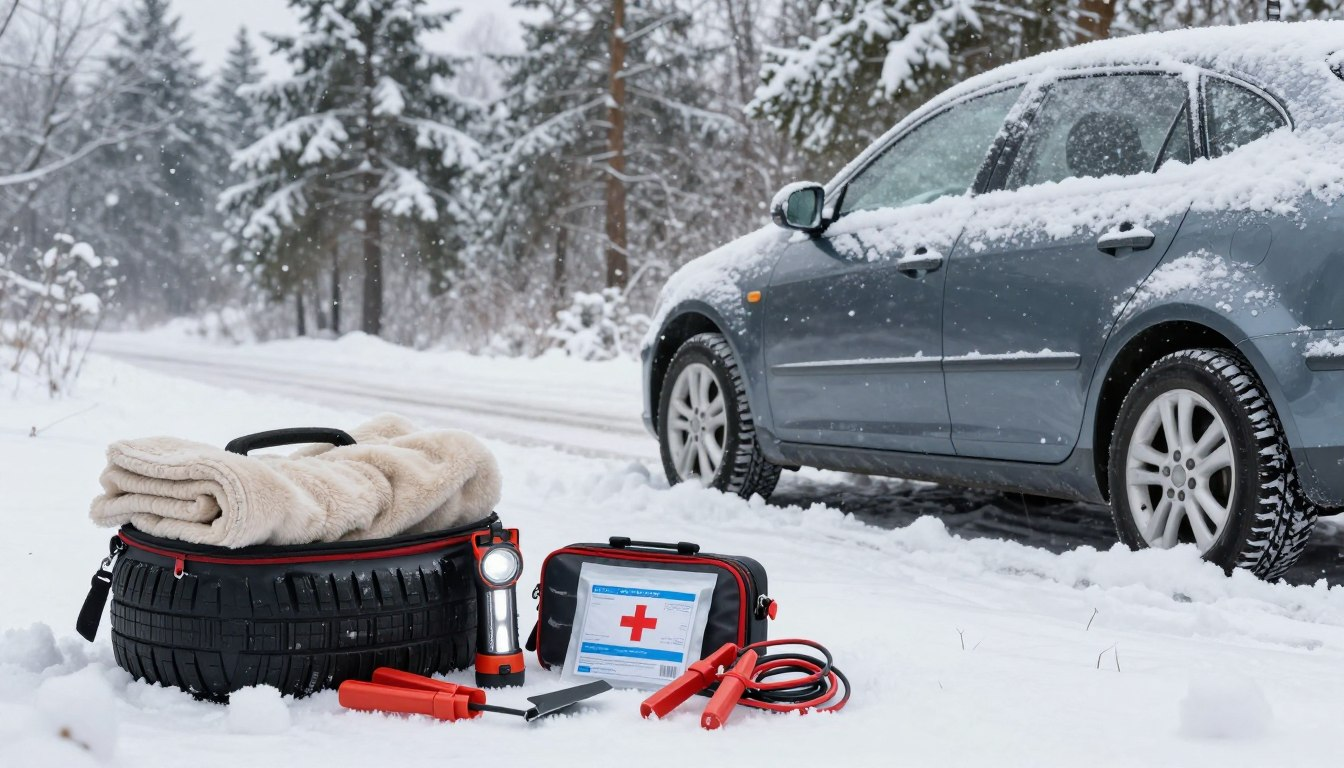
A winter car emergency kit list isn’t about carrying more stuff—it’s about solving winter-specific failure points: loss of heat, loss of visibility, loss of traction, and delayed help.
In cold states, the most dangerous roadside situations are often “quiet emergencies”: your car runs, but you’re stuck; your phone works, but the battery drains; traffic moves, but tow trucks are hours away. The kit that matters is the one you can use quickly with cold hands and low light.
The U.S. National Highway Traffic Safety Administration (NHTSA) recommends winter emergency supplies like a shovel, ice scraper, abrasive material (sand/kitty litter), jumper cables, warning devices, blankets, and basics like water, food, and medicine—because these address the most common winter breakdown problems.
Disclaimer: This article is for general safety information. Follow your vehicle owner’s manual and local authorities. For emergencies, contact local services.
The winter priority order (what reduces risk first)
When something goes wrong, this order prevents bad decisions:
- Stay warm (reduce heat loss fast)
- Stay visible (prevent secondary crashes, help responders find you)
- Reduce carbon monoxide risk if you run the engine
- Communicate + conserve power
- Recover traction only if it’s safe and likely to work
The carbon monoxide piece matters: the CDC warns that if a tailpipe is blocked by snow, carbon monoxide can build up quickly in the vehicle.
The “failure-mode” method: pack for problems, not categories
Most kits fail because they’re built like shopping lists. This method is more practical:
Failure Mode A: You can’t be seen (or you’re in a dangerous spot)
Pack: high-vis vest, headlamp, reflective triangles
Why: winter reduces contrast and drivers have longer stopping distances.
Failure Mode B: You can’t stay warm (even inside the car)
Pack: insulation under you, wind-blocking layer, dry layers, hand warmers
Why: your body loses heat faster than it can produce it during cold exposure.
Failure Mode C: You can’t move (loss of traction, snow buildup)
Pack: shovel + traction aid that actually works with your tires and road type
Why: spinning wastes time, fuel, and heat.
Failure Mode D: Your phone and power die
Pack: power bank, 12V charger, jump starter (or cables)
Why: cold accelerates battery drain; communication is your safety net.
Failure Mode E: Injury or medical needs
Pack: winter-aware first aid, meds protected from freezing, clear info card
Why: delays turn minor problems into bigger ones.
The 3-layer kit system (so you can reach what matters)
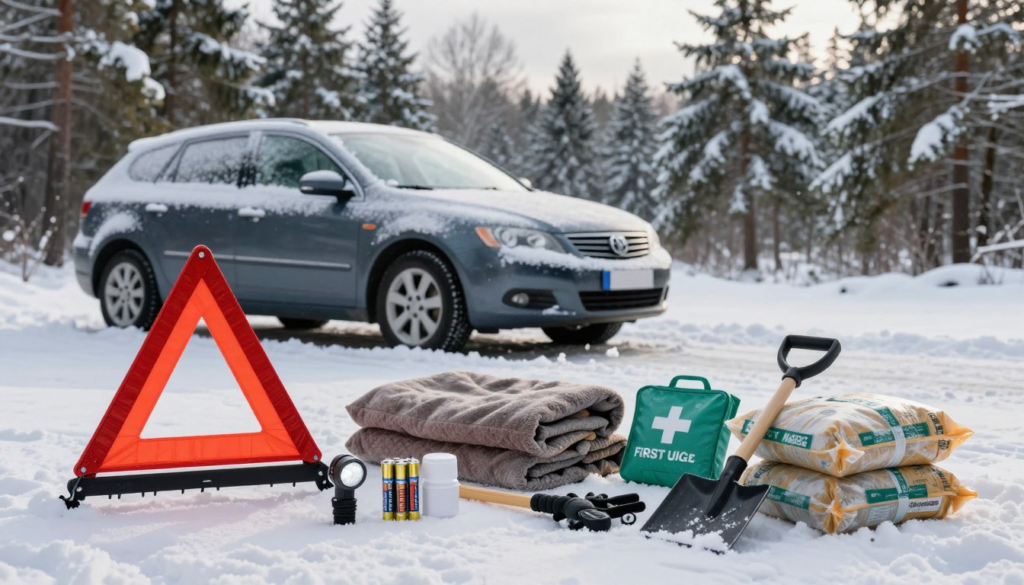
A winter kit buried under groceries is a feel-good idea, not a safety system. Use this:
Layer 1: The 60-second Grab Bag (keep in the cabin)
Goal: reachable without leaving your seat.
- High-vis vest
- Headlamp (hands-free beats flashlight)
- Phone cable + 12V charger
- Power bank (charged)
- Warm hat + insulated gloves
- 2–4 hand warmers
- Whistle
- 1–2 dense snacks
Why it works: If you slide off the road at night, you can become visible immediately before you open a door.
Layer 2: The Trunk Crate (main kit)
- Insulated blanket + foil blanket
- “Underlayer” insulation (foam pad or thick moving blanket)
- Compact shovel (rigid blade)
- Traction mats or sand/non-clumping cat litter
- 3 reflective triangles
- First aid kit + personal meds (insulated pouch if needed)
- Water (small bottles) + freeze-friendly snacks
- Jump starter or jumper cables
- Tire gauge + portable inflator
- Tool roll: multi-tool, duct tape, zip ties, nitrile gloves
Layer 3: Seasonal Add-on (swap in/out)
- De-icer spray
- Extra base layer + socks (compression bag)
- Chains/snow socks (if used/required) + install gloves
- Winter washer fluid top-up
- Small towel/microfiber cloths
Tip: Store the trunk crate so triangles and shovel are on top. In a real stop, you won’t want to unload everything to reach them.
Warmth that lasts: why insulation beats “more blankets”
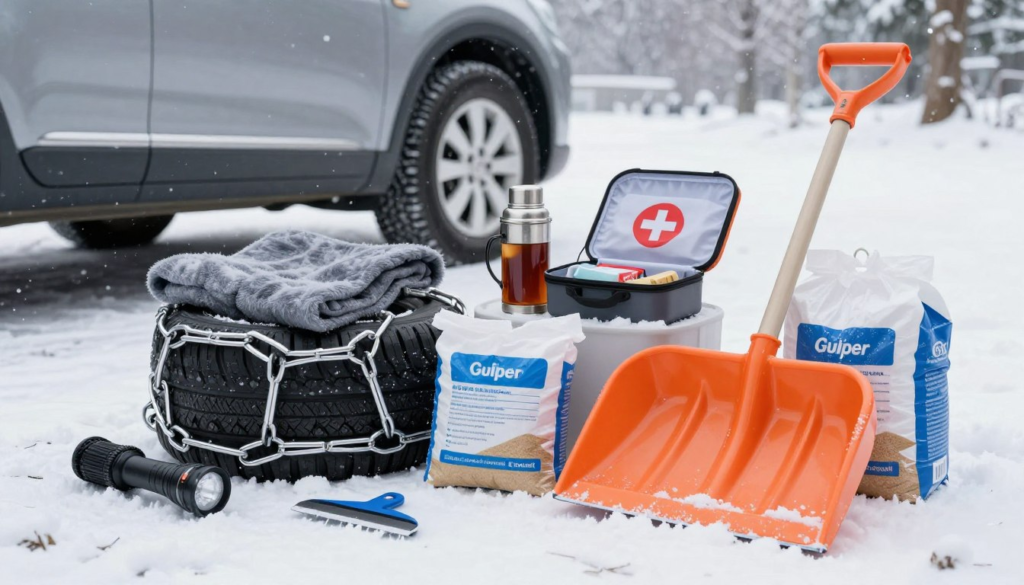
A common winter mistake is packing soft warmth but forgetting the physics: the cold steals heat through contact and wind.
Build a simple warmth system (3 jobs)
Job 1: Stop heat loss to cold surfaces
Car seats and floors pull heat from your body. Add an underlayer:
- closed-cell foam pad, thick wool blanket, or moving blanket
Job 2: Block wind and trap warm air
- insulated blanket (main warmth)
- foil blanket (wind-blocking outer layer; also reflects heat)
Job 3: Keep hands functional
Hand warmers are not “extra.” If your hands don’t work, you can’t shovel, attach chains, or use tools.
The CDC notes that in cold temperatures your body begins to lose heat faster than it’s produced, and long exposure uses up stored energy—this is why dry layers and insulation matter.
Engine heat warning (don’t ignore this)
If you run the engine while stuck, keep the tailpipe clear. The CDC explicitly warns that a blocked tailpipe can push carbon monoxide into the vehicle.
Visibility and roadside positioning (the “secondary crash” problem)
Being stuck is one problem. Getting hit by another vehicle is a worse one.
Minimum visibility kit
- High-vis vest
- Headlamp
- 3 reflective triangles
NHTSA includes warning devices and a flashlight in its winter driving preparation list for exactly this reason.
The 1-minute routine
- Hazards on
- Vest on
- Headlamp on
- If safe, place triangles
- Text location to a contact before your phone gets cold-drained
This routine is simple enough to remember under stress.
Traction and snow tools: choose what fits your roads
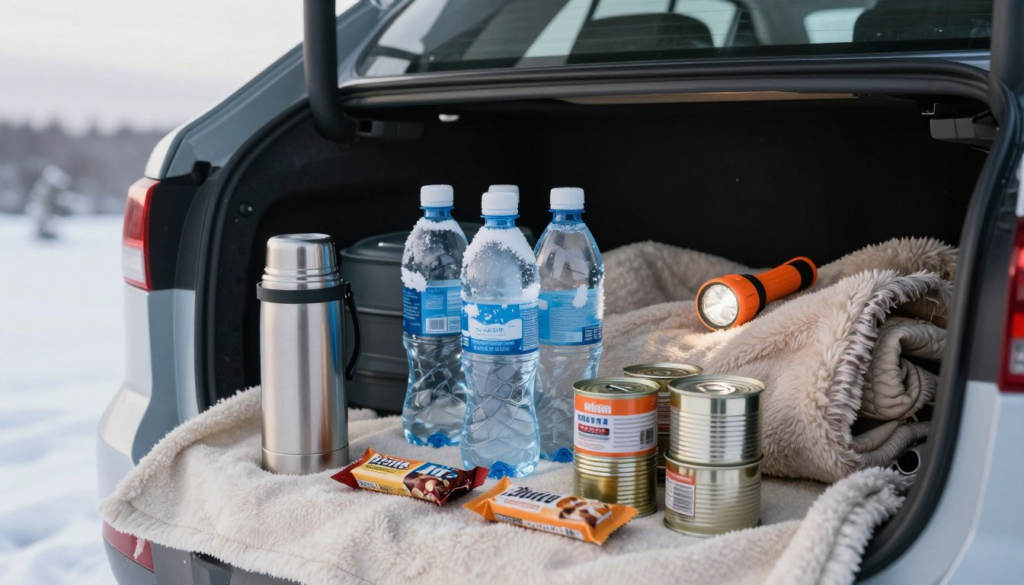
Traction tools are where generic advice wastes your time. Make one smart choice based on your driving profile.
Shovel: don’t buy the weakest link
A tiny folding shovel can work in powder but fails in wet snow. Prefer:
- rigid blade + compact handle (fits trunk, actually moves snow)
Traction decision guide (pick your primary + backup)
If you drive mostly city/flat roads:
- Primary: traction mats (fast, reusable)
- Backup: non-clumping litter/sand (cheap, messy, effective)
If you drive mountain passes or areas with chain rules:
- Carry chains or snow socks and practice installing once at home.
NHTSA specifically recommends abrasive material (sand or kitty litter) as a simple traction solution when stuck.
Cold-state tip: Keep traction items where they won’t freeze into a solid brick (an insulated tote helps).
Power plan: how to keep your phone and car alive in extreme cold
A winter kit should assume two power problems:
- Vehicle battery weakness
- Phone battery drain
The “two ways to start” rule
Carry either:
- a quality jump starter (best if you drive alone often)
or - jumper cables (fine if you’re usually around other cars)
Phone survival plan
- 12V charger + durable cable
- power bank stored in the cabin (stays warmer)
- low power checklist: battery saver, dim screen, close background apps
Food and water that stay usable (not rock-solid)
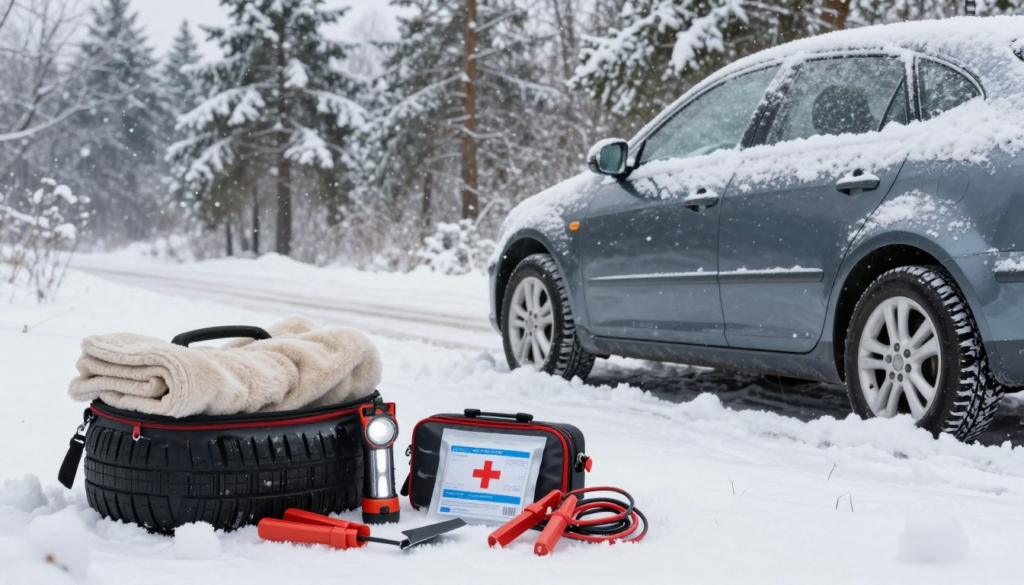
Food in winter isn’t comfort. It’s heat support—calories help your body maintain temperature.
Snacks that work in freezing temps
- nut butter packets (dense calories, easy)
- jerky
- sturdy energy bars (test one in your freezer)
- trail mix with minimal chocolate
Water that won’t freeze into a single unusable block
- smaller bottles thaw faster
- keep in an insulated bag
- rotate one bottle into the cabin on long drives
The Red Cross includes non-perishable food and water as core car emergency kit items because delays happen.
First aid for winter: cold injuries and medication handling
Winter adds a layer to first aid: cold injuries and the fact that supplies can freeze.
Hypothermia basics (why staying dry matters)
CDC explains that hypothermia risk increases as the body loses heat faster than it can produce it.
Practical kit items that help prevent it:
- dry base layer set
- underlayer insulation
- wind-blocking foil blanket
- warmers for hands/core
Frostbite: what to do and what not to do
CDC guidance includes: do not rub or massage, and rewarm using warm—not hot—water.
So your kit should include:
- clean cloth/gauze
- spare socks/gloves (wet fabric speeds heat loss)
- pain reliever if appropriate for you
Medications (often overlooked)
- keep critical meds in the cabin, not the trunk
- store in an insulated pouch
- carry a printed card: meds, allergies, emergency contact
EV-specific winter kit additions (range + charging reality)
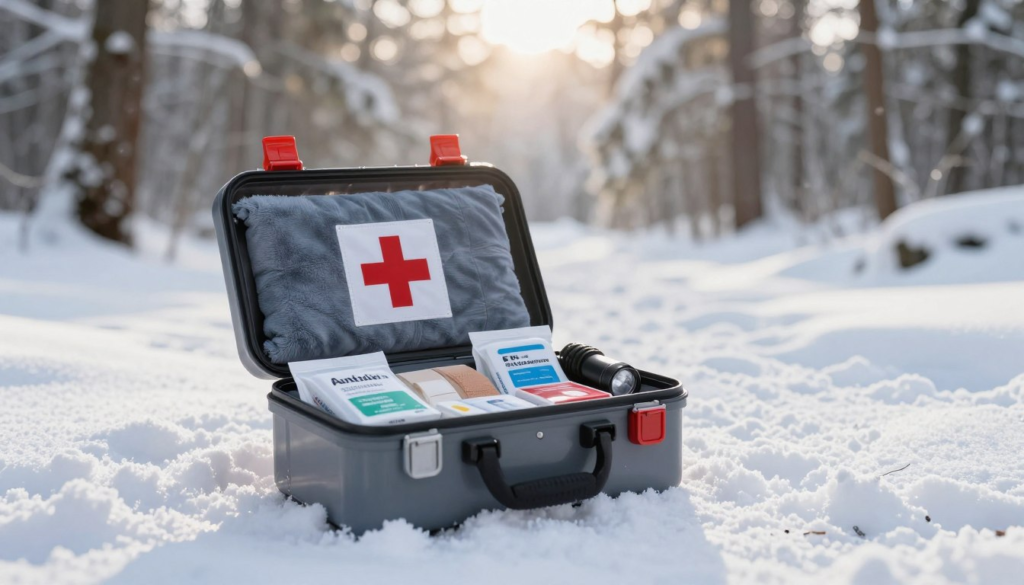
If you drive an EV in a cold state, the “emergency kit” includes energy planning, not just tools.
The U.S. Department of Energy notes that cold weather can reduce EV efficiency and range significantly, and much of the extra energy use can go to heating the cabin.
AAA also reports meaningful range drops in cold conditions when heating is used (numbers vary by vehicle and temperature).
EV winter add-ons
- stronger emphasis on warmth gear (so you’re not forced to blast heat)
- power bank + cable redundancy
- tire gauge + inflator (pressure drops in cold)
- printed charging plan card: nearest chargers + backups (paper beats a dead phone)
What NOT to pack (items that add risk)
Keep your recommendations clean and safe:
- open flames (candles, etc.) inside a vehicle
- unsealed fuel containers
- low-quality “gadget” tools that snap under load
- melt/refreeze foods that become useless
Good kits reduce risk. They don’t introduce new hazards.
Original download for you
Download: “Printable Winter Kit Checklist + Readiness Score (PDF)”
Conclusion: the kit that matters is the one you can use fast
A winter kit isn’t judged by how long your list is. It’s judged by whether you can:
- become visible in seconds
- stay warm without making unsafe choices
- keep power long enough to communicate
- recover traction only when it’s smart to try
NHTSA, CDC, and the Red Cross all point to the same foundation—shovel, traction help, warning devices, warmth, water/food, power, and medicine—because those solve the most common winter failure points.
The difference is how you pack it and how quickly you can use it. Build the 3-layer system, run the monthly audit, and you’ll have a kit that’s ready for real winter—not just a trunk full of “stuff.”
FAQs (schema-ready)
1) What’s the single biggest upgrade most kits miss?
An underlayer insulation piece (foam pad or thick moving blanket). It prevents heat loss to cold seats/floors and makes every blanket more effective.
2) Are reflective triangles better than flares?
Often yes for long-term roadside visibility. NHTSA includes warning devices (markers/flares) as recommended emergency supplies.
3) If I run the engine for heat while stuck, what’s the safety rule?
Keep the tailpipe clear of snow. CDC warns that a blocked tailpipe can cause carbon monoxide to build up inside the vehicle.
4) What traction aid is best on a budget?
Non-clumping cat litter or sand works as an abrasive. NHTSA specifically lists sand/kitty litter as an option when stuck.
5) How much food and water should I pack?
At least 24 hours of dense snacks and water stored to reduce freezing risk. The Red Cross includes food and water as core car kit items.
6) Do EV drivers need anything different?
Yes—cold can reduce range and increase energy use for heating. DOE and AAA both discuss cold-weather impacts on EV efficiency/range.