By Gustavoblalmiras • Last updated: March 2026
This article is for educational and general information only.
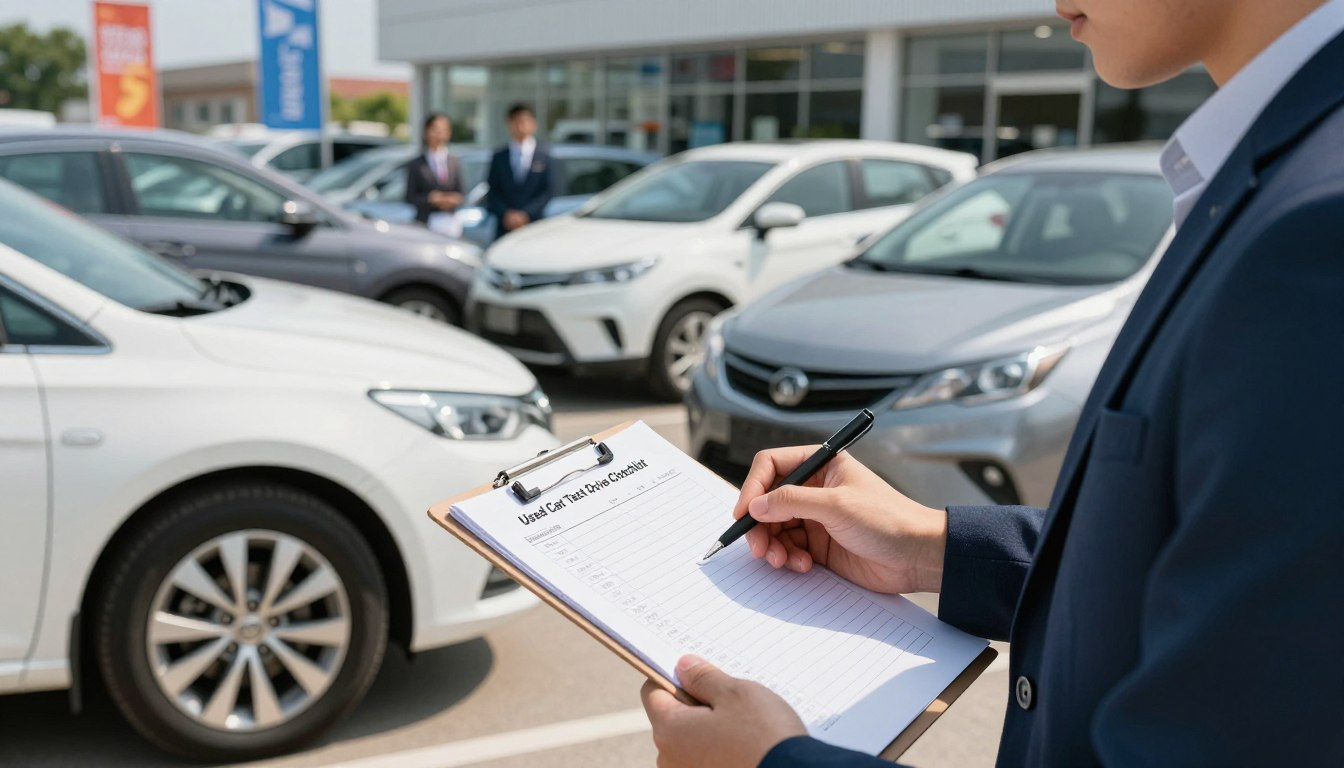
A used car test drive checklist shouldn’t read like a generic shopping list. It should behave like a diagnostic routine—because the most expensive problems don’t announce themselves while the car is parked, idling, and freshly detailed.
Used cars are popular for good reason, and demand can move sharply month-to-month. For example, Statistics Canada’s Retail Commodity Survey reported used motor vehicle sales up 7.1% year-over-year in October 2024, which means more activity, more quick flips, and more “looks fine for 10 minutes” listings: Statistics Canada report.
This guide is built around how issues actually reveal themselves: temperature changes, load changes, steering angle changes, and time. You’ll use a three-pass test drive (city + rough road + highway), then a post-drive heat-soak inspection that catches leaks, overheating behavior, and smells that only appear after everything warms up.
If you do nothing else: drive it long enough to get fully warm, and inspect it right after. Most people skip the “after.”
Disclaimer: This article is for general information only and doesn’t replace advice from a qualified mechanic, your vehicle owner’s manual, or local authorities. Always test-drive safely and follow local laws. If something feels unsafe, stop and seek professional help.
The 90-minute test drive system (why this is different)
Most advice says “try highway and city driving.” True, but incomplete. A car can feel fine in one condition and fail in another. Your goal is to force the car through the transitions that expose problems:
- Cold-to-warm transition (start-up behavior, misfires, belt noise, idle control)
- Low-speed steering lock (CV joints, steering rack noise, strut mounts)
- Brake heat + rotor behavior (vibration shows up after repeated stops)
- Highway load (engine load, transmission shifting logic, wheel balance)
- Heat soak (leaks, coolant smells, fan cycling, overheating tendencies)
This is the structure you’ll follow:
- Pass A (15–20 min): Neighborhood + tight maneuvers
- Pass B (10–15 min): Rougher road + braking checks
- Pass C (15–25 min): Highway + steady-speed behavior
- Post-drive (10–20 min): Heat-soak inspection + under-hood checks
Optional: watch this before you go
Optional: Watch this quick overview first, then use the checklist below during your test drive.
Before you meet the seller: the “permission + paperwork” script (saves time)
You’re not being difficult—you’re being normal. Consumer protection guidance consistently recommends inspecting the vehicle, test-driving under varied conditions, and getting an independent mechanical inspection. VehicleHistory.gov (NMVTIS) even prompts buyers to ask whether they test drove under varied road conditions (hills, highways, stop-and-go): NMVTIS buying tips.
Send this message before you show up:
Copy/paste message
- “I’d like a 45–90 minute test drive that includes city streets and highway. I’ll bring my licence and insurance. If everything feels good, I’ll also want a pre-purchase inspection with a mechanic I choose.”
If they refuse the idea of an independent inspection, that’s not “their preference”—that’s risk.
The FTC notes that even dealer-inspected or “certified” cars can still benefit from an independent inspection, and that history reports don’t replace one: FTC “Buying a Used Car” (PDF).
What to bring (tiny kit, big payoff)
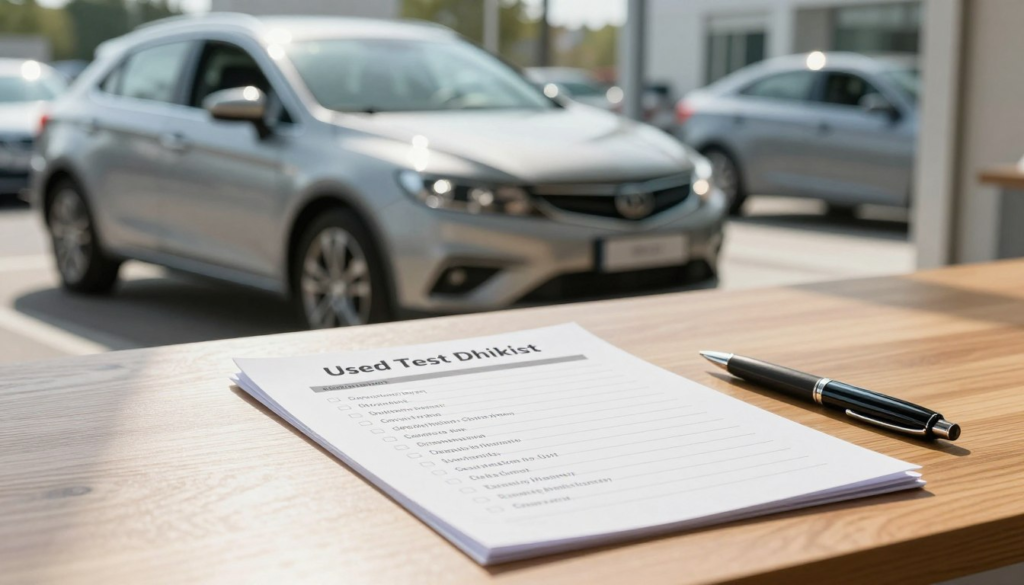
Skip the suitcase of tools. Bring a few items that increase signal and reduce guesswork:
- Phone + charger cable (photos + notes)
- Flashlight (engine bay + underbody peek)
- Paper towels/napkins (wipe dipstick, check suspected leaks)
- Tire pressure gauge (fast sanity check)
- A second person (one drives, one listens/observes). Consumer Reports recommends planning a route and bringing a friend: Consumer Reports test drive guide.
- Optional (high value): basic OBD reader (only with permission). Check pending codes, not just the obvious ones.
Step 1: Exterior walkaround (8 minutes, no distractions)
Panel alignment and paint “truth test”
You’re looking for inconsistency, not perfection.
- Compare gaps along hood, doors, and trunk.
- Look for overspray on trim or rubber seals.
- Check headlight housings: mismatched age or condensation can hint at collision or water intrusion.
Rust: check where it actually starts
Skip the obvious shiny paint. Look at:
- Rocker panels (below doors)
- Wheel arches
- Seam edges under doors
- Under the trunk lip and spare tire well
Tires: read the story in the wear pattern
Uneven wear can suggest alignment/suspension/steering issues or chronic underinflation.
Step 2: Interior check (7 minutes) – focus on expensive annoyances
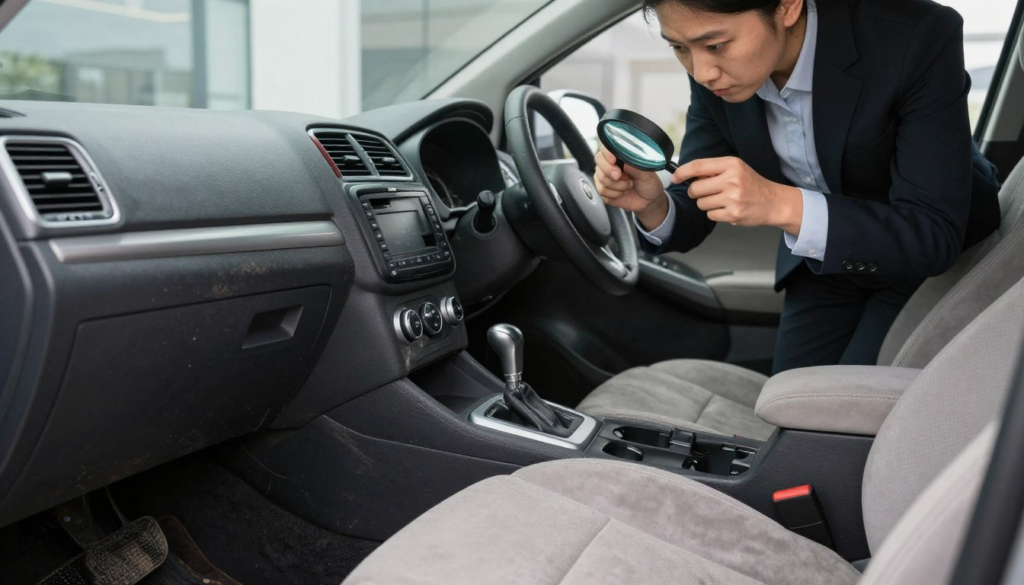
BCAA’s test drive guidance reminds buyers to test electronics like Bluetooth, cameras, wipers, and more: BCAA used vehicle checklist (PDF).
Do this quickly:
- Start the infotainment system, pair Bluetooth.
- Test backup camera + parking sensors.
- Try every window switch and lock.
- Turn on the heater fan and switch modes (floor/face/defrost).
- Sniff test: musty smell + damp carpets can indicate water intrusion.
Quiet detail most people miss:
Lift floor mats and press the carpet near the pedals and under front seats. Dampness there matters more than “a little smell.”
Step 3: Cold start behavior (the first 30 seconds matter)
If possible, ask the seller not to start the car before you arrive. Cold start can reveal:
- Weak battery / slow crank
- Timing chain rattle (some engines)
- Rough idle or misfire
- Exhaust smoke patterns
What you want:
- Quick start, stable idle within seconds
- No persistent warning lights
- No harsh metallic knocks
If the dash lights up and then clears—fine. If something stays on, note it and treat it seriously.
The complete test drive checklist (three-pass route)

Pass A: Low-speed loop + steering lock checks (15–20 minutes)
This is where you find:
- CV joint clicking (tight turns)
- Strut mount clunks
- Steering rack noise
- Brake pedal feel issues at low speed
Do these maneuvers in an empty lot:
- Full-lock circle both directions (slow): listen for clicking or binding
- Figure-8: listen for clunks as weight shifts
- Reverse + brake: feel for jerkiness or grinding
- Parking brake test (safe area): does it hold?
Red flag: clicking on full lock often points to CV joint wear.
Pass B: Rough road + brake heat test (10–15 minutes)
Find a route with:
- uneven pavement
- speed humps
- mild potholes (don’t abuse the car)
Listen for:
- clunks over bumps (suspension joints, sway links)
- rattles (loose heat shields, exhaust hangers)
- steering wheel shake
Brake test (controlled and safe)
Do 3–5 normal stops and 1–2 firmer stops from moderate speed (not reckless).
- Steering wheel vibration while braking can suggest rotor issues or front-end problems.
- Pedal sinking can suggest hydraulic problems.
Pass C: Highway run (15–25 minutes)
Highway exposes:
- wheel balance issues
- drivetrain vibration under load
- transmission shift behavior at cruising speed
- wind noise from bad seals or prior bodywork
Checklist at speed:
- Tracks straight without constant correction
- No rhythmic vibration in wheel or seat
- Engine stays smooth at steady throttle
- Transmission doesn’t “hunt” gears on slight hills
Quick test: set cruise (if equipped). Does it hold speed smoothly or surge?
Post-drive heat-soak inspection (the part that catches hidden problems)
Park, leave the engine running for a minute, then shut it off and do this:
1) Smell test (high signal)
- Sweet smell = possible coolant
- Burnt oil smell = possible leak onto hot components
- Strong exhaust smell in cabin = safety issue
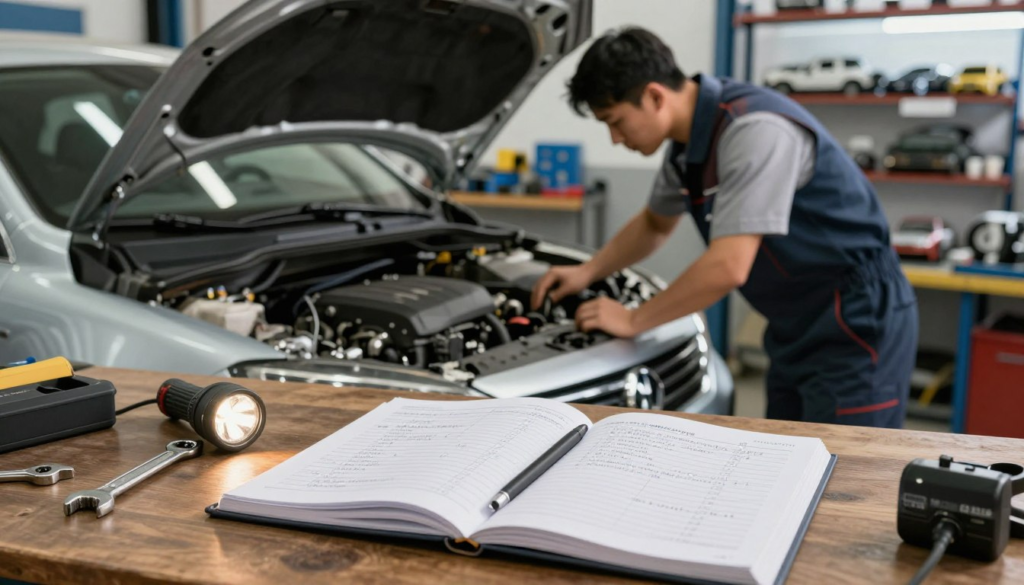
2) Under-hood look (do not touch hot parts)
- Any wetness around coolant hoses?
- Radiator fan cycling seems normal?
- Any new drips forming underneath?
3) Ground check
Move the car a few feet and look where it was parked. Fresh spots matter.
4) Fluid sanity (if seller allows)
- Oil level and color (some darkness is normal; milky is not)
- Coolant level should be in range (never open hot systems)
Symptom-to-meaning table (useful during the drive)
| What you notice | What it can mean | What you do next |
|---|---|---|
| Vibration at 60–70 mph | wheel balance, bent rim, worn suspension | note speed range; inspect tires/rims |
| Clicking on tight turns | CV joint wear | price repair or walk |
| Surging at steady speed | transmission logic, misfire, air/vacuum issues | request scan + inspection |
| Brake shake under braking | rotors, suspension, tire issues | inspect rotor/tire wear; estimate cost |
| Temp gauge climbs in traffic | cooling system weakness | walk unless proven fixed |
| Musty smell + damp carpet | water leak, flood risk, mold | walk if unexplained |
Seller claims “translation guide” (protects you from soft lies)
People rarely say “this car has a problem.” They say:
- “It’s just how these cars are.”
Translation: they want you to stop noticing it. - “It only does that sometimes.”
Translation: intermittent issues are often the hardest (and most expensive) issues. - “Easy fix.”
Translation: if it were easy, it would already be fixed. - “No time to get it inspected.”
Translation: they don’t want a third party involved.
The FTC encourages getting promises in writing and considering an independent inspection: FTC “Buying a Used Car” (PDF).
When to involve a mechanic (the smart line, not the paranoid line)
A pre-purchase inspection is not an insult—it’s standard. FTC guidance stresses that a vehicle history report isn’t a substitute for an independent mechanical inspection: FTC used car guidance.
Get an inspection if:
- you feel any vibration, pull, clunk, or hesitation
- warning lights appear (even briefly)
- there’s any sign of fluid leaks
- the seller can’t show service history
Region-safe paperwork checks (simple, avoids scams)
This varies by country, so keep it generic and legal:
- Match the VIN on the vehicle to the paperwork.
- Confirm title/registration status and lien status where applicable.
- If you’re in the UK, verify the V5C log book details match the vehicle.
Decision rule: the “2-strike walk-away”
One small issue is normal. Two unrelated issues is a pattern.
Walk away if you get:
- one major safety concern (brakes, steering unpredictability, overheating),
- or two medium concerns (vibration + shifting weirdness, leak + warning light, etc.).
The best deal is the one you don’t buy.
Printable scorecard (direct download)
Download: Used Car Test Drive Scorecard (PDF) — no email required.
Conclusion
A test drive isn’t a vibe check—it’s controlled exposure. You’re forcing the car through conditions that reveal how it behaves when warm, under load, while turning, and after heat soak. That’s where hidden costs show up.
And remember: the test drive is only half the protection. Consumer-focused guidance repeatedly points buyers toward independent inspections because even honest sellers don’t always know what’s failing—especially with intermittent issues.
If you follow the three-pass route, do the post-drive checks, and treat “no inspection” as a deal-breaker, you’ll avoid most of the expensive surprises that turn “great price” into “regret purchase.”
About the author
Gustavoblalmiras publishes practical car-buying checklists and driver guides at DriversAdvice.com. For corrections or updates, please use the site contact page.
FAQs
1) How long should a used car test drive be?
Long enough to fully warm up and include mixed driving. A structured 45–90 minutes (city + rough road + highway + post-drive check) finds more than a quick loop.
2) Is a vehicle history report enough?
No. FTC guidance says history reports don’t replace an independent mechanical inspection. Use both: FTC used car guidance.
3) What’s the biggest mistake buyers make on a test drive?
Skipping planning (same roads, same speeds) and skipping the post-drive heat-soak inspection, where leaks and cooling issues often show up.
4) Should I test the infotainment and electronics?
Yes—especially on newer used cars where repairs can be expensive. BCAA recommends testing electronics like Bluetooth, cameras, wipers, and other features: BCAA checklist (PDF).
5) What’s one “small” symptom that’s actually serious?
Overheating behavior (temp gauge rising, coolant smell, fan running abnormally) is not small. Cooling problems can become engine problems.
6) Should I bring the car to a mechanic even if it drives fine?
Yes, if you’re close to buying. FTC guidance supports independent inspections even when cars look good or are sold with warranties: FTC “Buying a Used Car” (PDF).
7) What if the seller won’t allow a long test drive?
Offer to schedule a time, provide your licence/insurance, and keep the route reasonable. If they still refuse, treat it as a risk signal.
8) Do I need highway driving?
Strongly recommended—highway speed reveals vibration, tracking issues, load behavior, and wind noise that you won’t notice at low speeds.