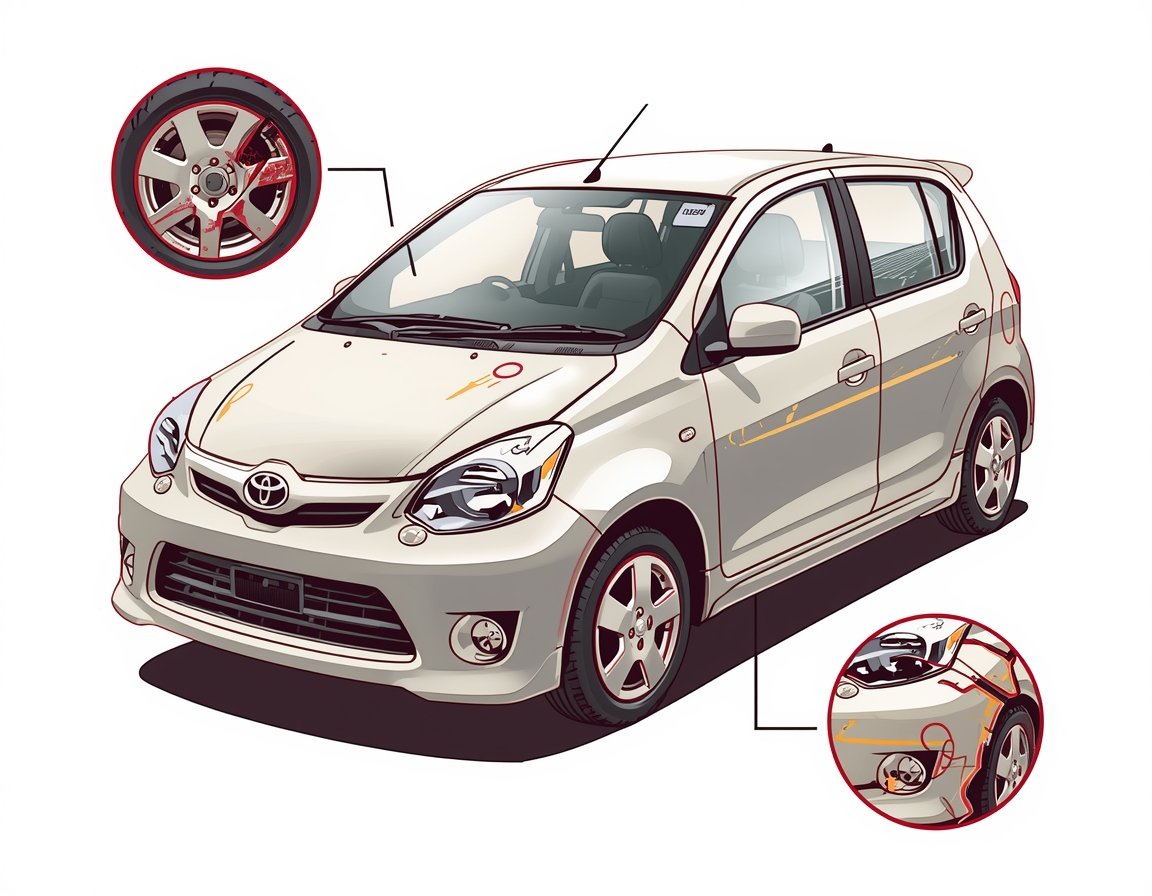
By Gustavoblalmiras
If you’re researching Toyota Sienta problems, you’re usually looking for one of two things: (1) what goes wrong most often, and (2) which issues (especially recalls) you must verify before buying. The Toyota Sienta is a compact MPV/minivan best known for its sliding doors, family-friendly layout, and a footprint that’s easy to live with in tight cities. It launched in 2003, and the newest generation arrived in 2022 with updated safety and efficiency tech.
This is only for educational purposes.
The good news: the Sienta is generally a sensible, reliable people-mover when maintained properly. The not-so-good news: like any MPV with sliding doors, hybrids, and lots of electrical features, there are a few repeat-problem areas that owners and used buyers should know about—especially around power sliding doors, water ingress, recall items, and hybrid cooling components.
Important: Availability, specs (including 5- vs 7-seat layouts), and recall coverage vary by market and VIN. Always confirm details using your local Toyota/transport authority recall checker and the vehicle’s paperwork.
At-a-glance: the biggest Sienta “watch-outs”
| Issue area | Why it matters | What to verify |
|---|---|---|
| Power sliding doors | Convenience + safety; failures can be expensive | Operate each door repeatedly; check for chimes/errors; confirm recall/campaign work |
| Water ingress | Can trigger electrical faults and connector corrosion | Check carpets/sills for damp; inspect trims for water marks; confirm any water-related recalls |
| Recall items (2023+) | Some recalls describe worst-case safety risks | VIN/registration recall status + proof of completion |
| Hybrid cooling/water pump | Cooling faults can become costly quickly | Stable coolant level; no warning lights; service history for cooling work |
| CVT drivability (some petrol models) | Shudder/jolt complaints can indicate maintenance issues | Test repeated gentle slow-downs; look for documented CVT fluid service |
Quick Sienta generations (why it matters)
Different generations have different “usual suspects,” so match advice to your model year. The Sienta has been in production since 2003, with major generation changes in 2015 and 2022.
- 1st gen (2003–2015): simpler tech; age-related wear is the big theme
- 2nd gen (2015–2022): more electronics + hybrid availability; more sliding-door and water-ingress discussions
- 3rd gen (2022–present): newer systems; fewer age issues, but recall/campaign checks still matter
1) Power sliding door problems (won’t open/close, beeping, stuck)
This is the most “Sienta-specific” headache because the model heavily relies on sliding doors for daily family use.
What owners report
- Door doesn’t open via key fob or button
- Door starts moving then stops and beeps
- Door needs manual help or only works intermittently
- Door latch/release mechanism fails
Real-world workshop write-ups commonly diagnose issues around the motor/actuator, latch sensors, wiring in flex points, or the door control system—especially when water intrusion is involved.
What to check (used-car test)
- Open/close each sliding door 10+ times using: key fob, dashboard button, and door handle
- Listen for struggling motors, grinding, or “half-latching”
- Check for warning lights, repeated chimes, or “door ajar” messages
2) Water leaks into the cabin (sliding door + pillar areas)
Water ingress is more than wet carpets—it can lead to electrical connector corrosion/shorts, which can trigger door locks, sensors, and sliding door malfunctions.
A) Service campaign: sliding door water intrusion (Japan)
Toyota published a Sienta service campaign in Japan describing water intrusion risk related to a service hole cover and drainage design details. If your car is a Japanese-market vehicle (or an import), treat this as a key history check item.
B) 2023 recall: pillar garnish clip water ingress → electrical faults
In a 2023 recall notice, Toyota described insufficient waterproof durability of a front pillar garnish mounting clip, which can allow water into the cabin and short electrical connectors. The recall notice describes a worst-case scenario on vehicles with power sliding doors.
Used-car checks:
- Feel under front carpets and around door sills for damp
- Look for water stains behind trim pieces (especially A-pillar and sliding door areas)
- Confirm recall/campaign work is completed (paperwork matters)
3) Safety recall topic: verify sliding door/lock recall completion (certain vehicles)
This deserves its own section because it isn’t a “minor inconvenience.” If recall documentation indicates a safety-related malfunction risk, your job as a buyer is simple: verify completion by VIN/registration and keep proof.
If a door/lock issue occurs while driving: signal, pull over safely, disable power door functions if possible, and book inspection/repair with Toyota or a qualified specialist promptly.
4) Parking brake pedal recall (bolt may loosen)
Recall notices in 2023 also described an issue affecting a foot-operated parking brake on certain vehicles, where tightening torque instructions could result in insufficient clamping force in some cases.
What to check:
- Parking brake engagement feels consistent (not sloppy/odd)
- No unusual movement/noise from the pedal area
- Recall completion confirmed with documentation
5) Fuel pump recalls (older Sienta generations)
Fuel pump issues can cause stalling or no-start situations. Older Sienta generations have had fuel pump-related recall references in Japan, and import history can make this harder to verify—so paperwork becomes more important.
Symptoms:
- Long cranking / hard starting
- Sudden stall
- Loss of power under load
6) Hybrid models: water pump / cooling system faults (warning lights, overheating risk)
Many Sienta buyers prefer the hybrid for fuel economy—and Toyota hybrids are generally strong. But cooling-system faults (including water pump issues) can become expensive if ignored.
Symptoms:
- Hybrid/engine warning messages
- Overheating or temperature warnings
- Coolant loss or visible seepage
- Whining noise near pump area
Used-buyer checks: stable coolant level after a long test drive, no warning lights, and evidence of correct cooling-system servicing/repairs.
7) EGR valve clogging / “EGR flow” type fault codes
EGR systems reduce emissions by recirculating exhaust gas. When EGR flow becomes restricted (often due to carbon buildup), drivability and economy can suffer and the ECU may trigger a warning light.
Symptoms: check-engine light, hesitation, rough idle, worse fuel economy, “flat” acceleration.
Buyer caution: “It just needs a quick sensor” is often an oversimplification—EGR-related issues can involve cleaning multiple air/intake components, not only swapping one part.
8) CVT drivability issues (shudder/jolt on deceleration) – model dependent
Some petrol Sienta models use a CVT. Some owners describe a shudder or “thunk” sensation when slowing down gently. CVT fluid condition and correct servicing history are important here.
Test drive check: perform several gentle slow-downs from ~30–0 mph and see if the drivetrain jolts consistently.
9) Excess vibration at idle (engine mount wear)
On higher mileage examples, worn engine mounts can transmit vibration into the steering wheel, pedals, and cabin—especially at idle in Drive with the brake held.
10) Brake noise and “hybrid brake feel” complaints
Some owners report brake squeal or dragging-type noise, and others notice the different feel of brake blending on hybrids (regenerative + friction braking). Persistent or worsening noise should be inspected.
11) 12V battery drain (more common when hybrids sit unused)
This is a common “hybrid ownership” theme: if the car sits for long periods, a weak 12V battery can cause odd electrical behavior. For a used purchase, ask directly if it has needed jump-starting.
Used-buyer checklist (fast, high-conversion)
- Run a recall check by VIN/registration and screenshot/save the result.
- Test sliding doors repeatedly (all buttons/handles/fob methods) and confirm locks behave correctly.
- Check for water ingress: feel carpets, check sills, look for trim water marks and musty smell.
- Scan for codes if possible (especially hybrid system warnings, door/lock faults, cooling-related alerts).
- Hybrid check: stable coolant level and no warnings after a long test drive.
- CVT check (if fitted): repeated gentle deceleration should feel smooth and consistent.
Conclusion
The Toyota Sienta is usually a dependable compact people-mover, but the biggest repeat themes are power sliding door reliability, water ingress leading to electrical issues, and (on hybrids) cooling-system component health. For any used Sienta—especially imports—your best protection is simple: verify recalls by VIN/registration and keep proof of completion, then thoroughly test the sliding doors and check for damp carpets before you buy.