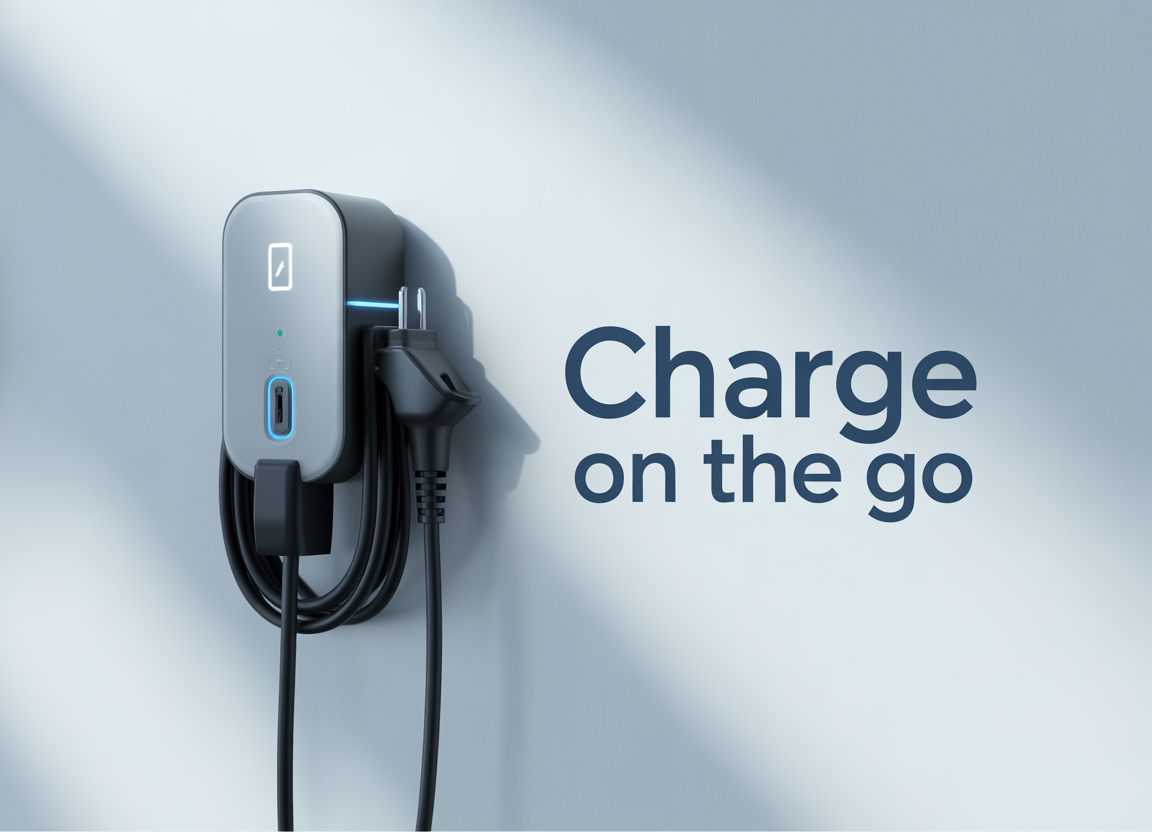
Level 1 is the slowest type of EV charging. L1 chargers plug directly into a standard 120V AC outlet and typically deliver roughly 1.3–2.4 kW. For many drivers, that’s still “good enough” for overnight top-ups, workplace charging, or as an emergency/travel backup.
By Gustavoblalmiras • Last updated: March 2026
This article is for educational and general information only.
In North America, Level 1 usually means a 120V household outlet, commonly limited to 12A on a 15A circuit (about 1.4 kW). A dedicated 20A outlet can support higher continuous current depending on the EVSE and setup. Because Level 1 is slow, some EVs can take 40–50+ hours to go from very low to around 80%.
The “best” portable Level 1 charger is the one that’s safe (UL/ETL listed), matches your outlet, and fits your driving routine — not the one with the flashiest marketing.
Quick warning: avoid unsafe chargers
Skip any charger listing that is vague about certification, shows no label photos, or uses generic phrases like “tested” without a real safety mark. A portable EVSE is a continuous high-load device — cheap unsafe units can overheat outlets and wiring.
What to look for in a portable Level 1 EV charger
1) Safety certification (non-negotiable)
Look for UL/cUL or ETL certification on the unit and documentation. If you can’t confirm a genuine certification mark, don’t buy it.
2) Plug type + continuous load limits
Most Level 1 charging uses NEMA 5-15 (standard household outlet). Many portable units cap at 12A for safer continuous use on a 15A circuit. If you have a dedicated NEMA 5-20 outlet/circuit, some EVSEs can support higher continuous current (often 16A), but only if the EVSE and wiring are designed for it.
3) Cable length and portability
Level 1 is already slow — don’t make it worse by parking awkwardly. A longer cable can prevent outlet strain and unsafe extension-cord setups.
4) Weather resistance
If you’ll charge outside, pick a unit with clear outdoor ratings and good strain relief. If the listing won’t clearly state environmental protection, assume it’s not meant to live outdoors.
5) Adjustable amperage (very useful)
If your charger supports adjustable current (example: 8A/10A/12A), that’s valuable. You can reduce load on older outlets or shared circuits.
Outlet safety checklist (this improves approval + protects readers)
- Use a dedicated outlet if possible (no space heaters / microwaves / etc. on the same circuit).
- Do not use cheap extension cords. If you must extend temporarily, use a heavy-duty cord rated for the current — and stop if anything warms up.
- First charge test: after 15–20 minutes, carefully feel the plug/outlet area. Warm is a warning; hot is stop immediately.
- Replace worn outlets (loose grip, discoloration, cracking).
- If unsure, ask an electrician — especially in older homes.
Top portable Level 1 picks (safe choices)
These are “safe category” picks based on certifications, published specs, and brand transparency. Always confirm certification on the exact model you’re buying.
1) Best overall dual-voltage: Webasto Go
Why it’s a strong pick: portable design, reputable brand, and commonly sold as a 120V/240V solution with published specifications.
- Best for: drivers who want one travel charger now and potential Level 2 capability later.
- Check before buying: the included plug set (120V plug type + any 240V plug like NEMA 14-50) and certification on the exact SKU.
Official link: Webasto Go (official)
2) Best for Tesla owners: Tesla Mobile Connector
Why it’s a strong pick: official compatibility and a clean adapter ecosystem for different outlets.
- Best for: Tesla owners who want a reliable charger to keep in the trunk.
- Check before buying: which plug adapters you need for your outlets.
Official link: Tesla Mobile Connector (official)
3) Best OEM-style non-Tesla option: GM Dual Level Charge Cord (J1772)
Why it’s a strong pick: OEM engineering and typically clear documentation for 120V and 240V use (model dependent).
- Best for: GM EV owners (or buyers who specifically want an OEM dual-level approach).
- Check before buying: the plug types included and supported current.
Official link: GM Dual Level Charge Cord (official)
4) OEM-style alternative: Ford Mobile Charger
Why it’s worth considering: if it came with the vehicle, it’s often the simplest compatible backup charger.
- Best for: Ford EV owners who want factory documentation and fitment.
- Check before buying: whether it supports 120V only or includes a 240V plug option.
Official link: Ford Mobile Charger (official)
5) Budget aftermarket pick: Lectron Level 1 (J1772)
Why people buy it: it’s widely available and typically marketed as certified (verify on the exact model). Budget doesn’t mean “unsafe,” but you must confirm certification and avoid counterfeit listings.
- Best for: a simple backup charger for occasional Level 1 use.
- Important: confirm the unit’s certification mark and use a healthy outlet/circuit.
Brand link: Lectron (official)
Which one should you choose?
- Want one travel charger now with future flexibility: Webasto Go
- Drive a Tesla: Tesla Mobile Connector
- Drive a GM EV and want OEM: GM Dual Level Charge Cord
- Drive a Ford EV and already have the OEM cord: Ford Mobile Charger
- Need a basic backup on a budget: Lectron Level 1 (verify certification)
Level 1 charging: realistic expectations
Level 1 is slow by design. Treat it as:
- an overnight top-up tool,
- a workplace/daytime trickle charger,
- and a travel backup.
If you routinely need large daily refills, a Level 2 setup usually makes life easier.
About the author
Gustavoblalmiras publishes practical driver guides and car-ownership checklists at DriversAdvice.com. If you spot an outdated spec or want to suggest an update, please use the site contact page.