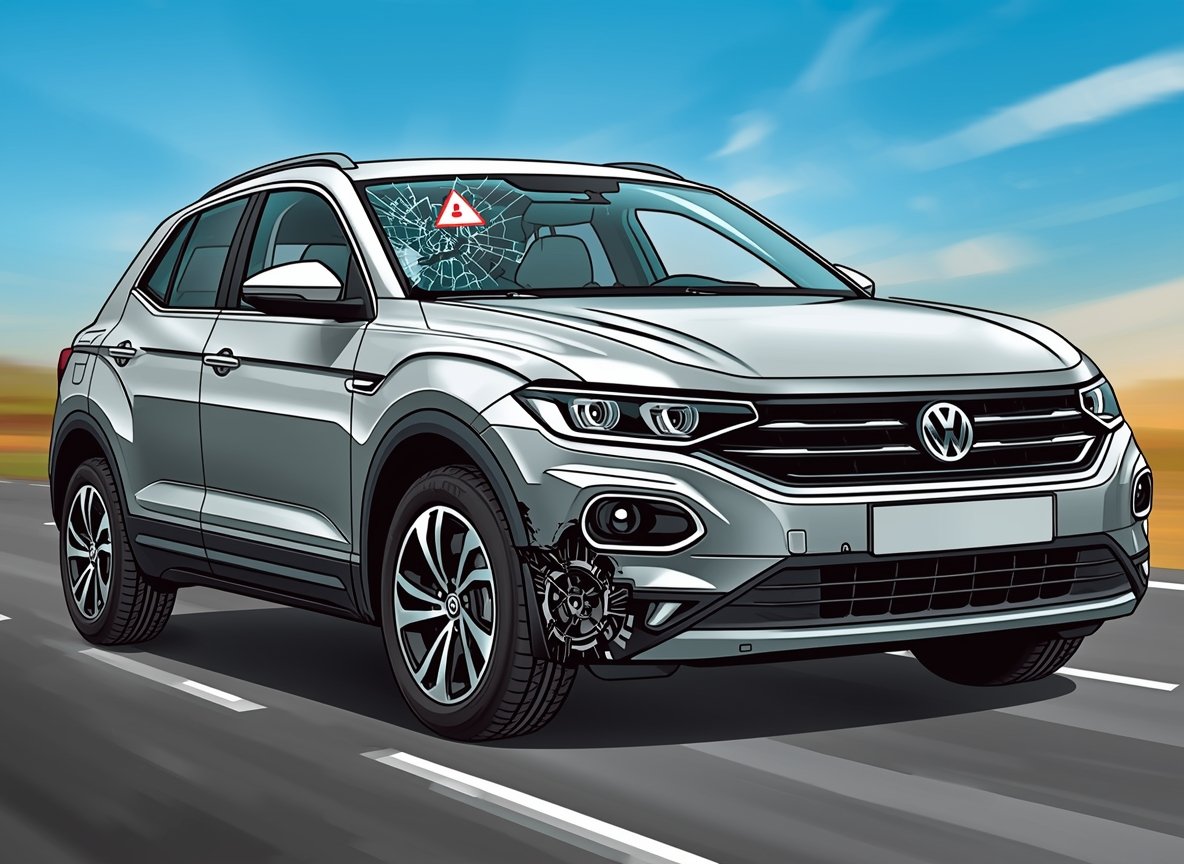
Are you familiar with VW T-Roc problems? Some common VW T-Roc problems may include clutch problems, brake issues, infotainment glitches, door lock faults, diesel emissions-system warnings (AdBlue/DPF), and a handful of safety recalls that buyers sometimes miss.
The Volkswagen T-Roc is a great compact crossover when you get a good one—nice to drive, practical, and widely available on the used market. But because it’s sold with different engines and gearboxes (manual, DSG; petrol, diesel; Cabriolet variants), the “problems” you should worry about depend heavily on your exact model year and powertrain.
This article is for educational and general information only.
Below is a no-nonsense guide to the most important T-Roc issues, the symptoms to watch for, and what to check before buying.
1) Electric parking brake recall checks (safety-critical on some vehicles)
Parking brake issues are safety-critical. Some T-Roc vehicles have had recall notices/campaigns related to the electric parking brake behavior in certain regions and build periods.
What you should do (best practice)
- UK: check the registration on the official GOV.UK recall checker: GOV.UK recall checker
- If you’re outside the UK, use your country’s official recall portal (if available) or ask a VW dealer to confirm open campaigns using the VIN.
- Ask the seller for proof recall work was completed (dealer invoice/record).
What you might notice
- Parking brake doesn’t feel consistent on a slope
- Unexpected creeping/rolling behavior (treat as a stop-and-check issue)
- Intermittent warnings (don’t rely on warning lights alone)
2) Seatbelt retractor campaigns (verify by VIN/region)
Seatbelts are non-negotiable. There have been safety alerts in some regions involving front seatbelt retractors. Always verify recall/campaign status by VIN in your country.
Buyer checks
- Confirm the belt retracts smoothly.
- Confirm it locks firmly under a sharp tug.
- Check for open recalls/campaigns before purchase.
Reference example (EU Safety Gate alert database): European Commission Safety Gate.
3) DSG automatic gearbox issues: hesitation, jerky shifts, shudder
The T-Roc is commonly paired with VW’s DSG dual-clutch gearboxes. They can be excellent when healthy, but they’re sensitive to maintenance and correct fluid servicing. Behavior also differs by DSG type (wet clutch vs dry clutch), which can affect wear and service needs.
Autocar notes you should feel for juddering between shifts during a test drive and that servicing/fluids can be a factor: Autocar T-Roc reliability.
Symptoms to watch for
- Hesitation when pulling away (pause → lurch)
- Shudder under light acceleration
- Jerky 2→1 downshifts approaching a stop
- “Gearbox malfunction” warnings (worst case)
Smart buyer checks
- Test drive both cold and fully warm (some issues show more when warm).
- Ask for proof of DSG servicing where applicable (prefer invoices over stamps).
- If you feel repeated judder, don’t accept “they all do that.” Healthy DSGs should not shudder constantly.
4) 1.5 TSI “kangarooing” / pull-away judder (mainly older manual cars)
This is one of the most talked-about T-Roc quirks because it can make stop-start driving awkward—especially from cold on some manual 1.5 TSI cars.
HonestJohn describes a software-related low-speed judder issue on some 1.5 TSI manual vehicles: HonestJohn 1.5 TSI issues. Autocar also discusses the model and updates: Autocar T-Roc review.
What it feels like
- Jerky take-off in 1st (especially when cold)
- Bucking/hesitation at low RPM
- Hard to drive smoothly in traffic
How to test it properly
- Ask the seller not to warm the car up before you arrive.
- Cold start → gentle driving in a residential area.
- Pay attention to take-off smoothness in 1st and 2nd at low RPM.
Best fix path
- Confirm whether the relevant software update has been applied (dealer record/invoice).
- If it still behaves badly after updates, consider a different engine/gearbox combination.
5) Diesel AdBlue + DPF warning lights (short-trip use and higher mileage)
Diesel T-Rocs can be great motorway cars, but modern diesel emissions systems can be troublesome when driving patterns don’t suit them (lots of short trips, interrupted regenerations, ignored warnings).
What Car? reliability coverage mentions AdBlue and DPF-related faults as complaints that can appear on used vehicles: What Car? T-Roc reliability.
Symptoms
- AdBlue/emissions warnings
- DPF light, regeneration messages
- Limp mode, reduced power
- Fans running after shutdown (regen behavior)
Buyer checks
- Ask what kind of driving the car did (motorway vs short commutes).
- Scan for stored emissions faults (even if the light is currently off).
- Be strict about service history: modern diesels punish neglected maintenance.
6) Infotainment bugs and electrical gremlins (screen glitches, pairing issues)
Not as dramatic as a gearbox fault, but it can ruin day-to-day enjoyment—frozen screens, Bluetooth/CarPlay dropouts, and occasional reboots.
What Car? notes infotainment issues can appear as a complaint category on used cars: What Car? used review.
Buyer checks
- Connect your phone and test calls + navigation audio.
- Test reversing camera (if fitted) and steering wheel controls.
- Ask if the car has had dealer software updates. VW UK info page: Volkswagen UK software updates.
7) Door lock/central locking faults (intermittent, sometimes moisture-related)
Intermittent locking behavior is a real owner-reported annoyance on some vehicles. This can be hard to reproduce during a quick viewing, so you should test it repeatedly.
What Car? mentions door lock problems in reliability reporting: What Car? reliability.
Buyer checks
- Lock/unlock repeatedly with the fob and keyless entry (if equipped).
- Check every door handle from inside and outside.
- Listen for inconsistent actuator sounds (one door slower/noisier than others).
8) Brake issues: noise, uneven feel, premature wear
Brakes are a recurring theme on many used cars: groans, vibrations, or uneven braking can point to worn pads/discs or (less commonly) caliper issues.
Autocar notes uneven braking and noises can appear in ownership reporting: Autocar reliability.
Buyer checks
- Do a few controlled stops from 30–50 mph (where safe).
- Look at disc condition (edge lip, heat spots, corrosion).
- Ask when pads/discs were last replaced (urban driving wears brakes faster).
9) Panoramic roof checks: leaks, blocked drains, wind deflector faults
Not all T-Rocs have a panoramic roof, but if yours does, check it carefully. Many panoramic roof systems manage water via drains; blocked drains or seal issues can lead to damp headliners and wet carpets.
Buyer checks
- Open/close the roof fully and listen for straining or grinding.
- Check headliner edges for staining or water marks.
- Lift floor mats and press carpet for dampness (front and rear footwells).
What to do before buying a used VW T-Roc (best-practice checklist)
- Check recalls: use official tools (UK: GOV.UK) or confirm by VIN with a dealer.
- Match the engine to your driving: short-trip drivers often have fewer diesel emissions headaches with petrol.
- Scan for fault codes: emissions (diesel), gearbox, infotainment, driver assist sensors.
- Do a real test route: cold start + low-speed pull-away + stop-start + short motorway run + full-lock turns.
Which VW T-Roc is the safest used buy?
There isn’t one perfect answer, but these rules help you avoid the most expensive combinations:
- If your driving is mostly short trips: consider petrol, and be strict about infotainment/door locks working properly.
- If you want a diesel: prioritize a motorway-use history and be strict about AdBlue/DPF warning history.
- If you want DSG: buy based on shift quality and service proof, not mileage alone.
References
- GOV.UK recall checker
- UK vehicle recalls database (T-Roc)
- EU Safety Gate alert example
- HonestJohn: 1.5 TSI issues
- Autocar: T-Roc reliability
- Autocar: T-Roc review
- What Car?: T-Roc reliability
- What Car?: used review
- Volkswagen UK: software updates
About the author
publishes practical used-car buying checklists and ownership guides at DriversAdvice.com. For corrections or updates, please use the site contact page.