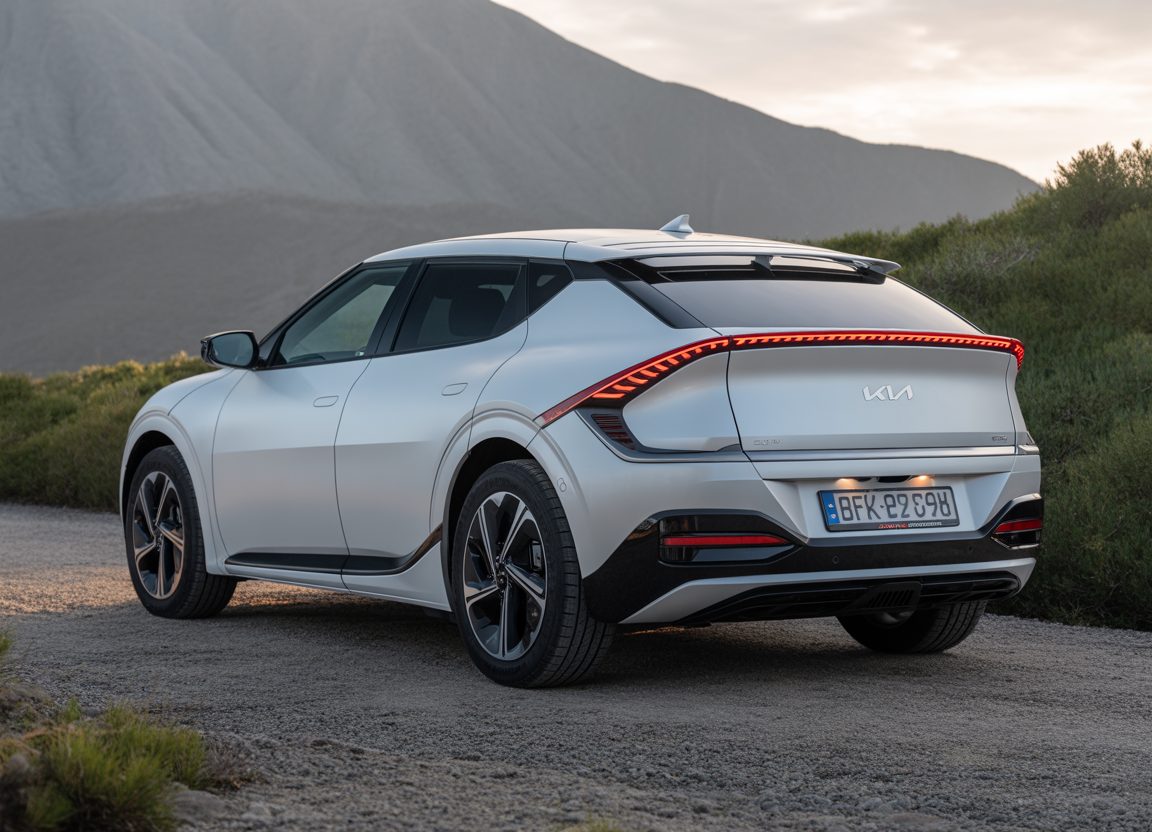
Are you familiar with Kia EV6 problems? The Kia EV6 is a sporty electric crossover (introduced for the 2022 model year) that’s widely praised for design, performance, and fast-charging capability. But like most software-heavy EVs, it has a handful of repeat problem areas that owners and used buyers should understand before a small annoyance turns into a big bill.
This is only for educational purposes.
This guide covers the most common Kia EV6 issues, what they look like in real life, which model years tend to come up most often in complaints/campaigns, and the smartest next step—whether you’re buying used or trying to keep your EV6 reliable long-term.
At a glance: EV6 issues worth checking first
| Issue area | Why it matters | Fastest check | Urgency |
|---|---|---|---|
| ICCU / 12V charging | Can cause warnings, reduced power, or loss of drive power | Run VIN for recalls/campaigns + confirm repair paperwork | High |
| Level 2 charging interruptions | Home charging may stop/slow due to heat at the charge inlet | Ask about charging interruptions + verify latest updates | Medium–High |
| Cold-weather DC fast charging | Slow sessions if battery isn’t conditioned/warmed | Check if Battery Conditioning Mode exists & works | Medium |
| HVAC (heat/A/C) | Comfort + range impact; can require dealer diagnosis | Test heat and A/C on the same day if possible | Medium |
| Infotainment glitches | Annoying, but usually software-related | Stress-test CarPlay/Android Auto + navigation | Low–Medium |
| Brake-light behavior under strong regen | Following drivers rely on brake lamps | Confirm latest software + do a safe verification | Medium |
Quick overview: the 6 most common Kia EV6 problems
- ICCU failure / 12V battery not charging (loss of drive power risk)
- Level 2 (AC) charging interruptions (charge inlet heat / “charge interrupted”)
- Brake-light behavior during strong regenerative braking (one-pedal driving)
- Slow DC fast charging in cold weather (battery conditioning not enabled/used)
- HVAC issues (weak/no heat or A/C problems)
- Infotainment/radio glitches (software bugs, connectivity issues)
Safety note: EVs include high-voltage components. If you see “Check EV system”-type warnings, repeated 12V failures, burning smells, or charging faults that persist, don’t “experiment” with DIY electrical fixes—book a qualified EV-capable shop or dealer.
1) ICCU failure + 12V battery not charging (can lead to reduced power or shutdown)
One of the most discussed EV6 reliability concerns is the ICCU (Integrated Charging Control Unit) and the EV6’s ability to consistently keep the 12-volt battery charged. When ICCU-related faults occur, owners may see warnings, reduced power, or a no-start situation after the 12V battery drops too low.
Common symptoms
- 12V battery warnings, random electrical oddities
- Fail-safe / reduced-power mode
- Car won’t go into READY mode, or repeatedly needs jump-starting
Why it matters
This topic has been addressed by official recall/campaign activity in multiple markets because a loss of motive power is a safety issue.
What to do
- Run your VIN through your country’s official recall checker (and Kia’s owner portal where available).
- Ask for proof of completion (repair order/invoice) for any ICCU/12V-related recall or service campaign.
- If symptoms occur: avoid long drives “to see if it clears.” Have it diagnosed promptly—repeated 12V events can create secondary headaches.
Used-buyer tip: If the seller says “it just needed a jump once,” treat that as a serious clue. Ask why the 12V died and what repair was performed (not just “we charged it”).
2) Level 2 home charging stops or slows down (charge inlet heat / “charging interrupted”)
A common EV6 ownership complaint is Level 2 (240V AC) charging that starts normally and then stops, or suddenly slows to a much lower rate. In some cases, the underlying issue is excess heat at the charge inlet or a degraded connection that creates resistance (and heat) under high current.
Common symptoms
- Charging starts, then stops with “Charging interrupted / Charging failed”
- Charging rate drops significantly mid-session
- More likely at higher amperage (and/or warm weather)
What to do (practical and safe)
- Confirm software/campaigns: ask a Kia dealer to check your VIN for any charging-related updates or service actions.
- Use a temporary mitigation: reduce AC charging current in the car settings or on the EVSE to reduce heat (useful while waiting for inspection/update).
- Inspect the basics (no disassembly): make sure the connector seats firmly, the plug is clean/dry, and avoid worn adapters/loose connectors that can increase resistance and heat.
Buyer tip: Ask the owner what amperage they charge at (32A vs 40A vs 48A), and whether the car has ever stopped charging overnight. It’s one of those issues you might not notice on a quick test drive.
3) Brake-light behavior during strong regenerative braking (one-pedal driving)
With one-pedal driving and strong regenerative braking, some drivers worry about when brake lights illuminate during deceleration. The safe approach is simple: keep the vehicle updated, and verify brake-light behavior in a controlled environment.
Why you should care
Drivers behind you rely on brake lamps as a cue. If brake lights don’t illuminate when following drivers expect them to, rear-end risk can increase—especially in stop-and-go traffic.
What to do
- Confirm your EV6 has the latest updates (dealer can verify by VIN and software version).
- Safe verification: in an empty car park (legal/safe), have a helper observe the brake lights while you decelerate at low speed using regen and the brake pedal. Don’t do tests on busy roads.
Note: Even if you mostly rely on regen, it’s still smart to use the brake pedal normally when traffic conditions demand clear brake-light signaling.
4) Slow DC fast charging in cold weather (battery conditioning not enabled/used)
Cold batteries charge slower. If the pack is cold, your DC fast-charging session can start at low power and take longer to ramp. Many EV6 versions support Battery Conditioning Mode (sometimes called preconditioning) to help warm the battery before arriving at a DC fast charger.
Common “this charger is slow” scenarios
- Winter charging starts very low and stays low for a long time
- You arrive with a cold-soaked car (parked outside), then fast-charge immediately
- You don’t have a DC charger set as the navigation destination (so the car doesn’t warm the pack proactively)
What to do
- Enable Battery Conditioning Mode (if your EV6 supports it).
- Set the DC fast charger as your navigation destination so the vehicle can prepare the battery (when conditions allow).
- Expect normal taper: charging is fastest at lower state-of-charge and slows as the battery fills.
Buyer tip: If you live in a cold climate, ask the seller if they routinely DC fast charge in winter and whether battery conditioning is available/working on that car.
5) HVAC trouble (no heat, weak heat, or A/C issues)
HVAC issues are frustrating in any vehicle, but in an EV they affect comfort and range. EV6 heating performance can vary depending on trim/region (some versions use a heat pump; others rely more on resistive heating).
Common symptoms
- Heat is weak, inconsistent, or doesn’t warm up normally
- A/C cooling is weak or intermittent
- Fan blows but temperature doesn’t respond as expected
What to do
- On a test drive, run heat and A/C long enough to confirm stable performance (not just 60 seconds).
- If HVAC is clearly failing, request a diagnostic scan for HVAC-related fault codes (EV HVAC systems are not “guess and replace” friendly).
6) Infotainment and radio glitches (software bugs, connectivity issues)
The EV6 relies heavily on software. Some owners report infotainment quirks such as frozen screens, delayed response, CarPlay/Android Auto disconnects, or occasional reboots. Most of the time, these are solved with updates or resets—but you want to discover them before buying.
Used-buyer “tech stress test” (5–10 minutes)
- Pair your phone and make a call over Bluetooth
- Run navigation + music at the same time
- Plug in CarPlay/Android Auto (if you use it) and watch for drops
- Confirm cameras and parking sensors behave consistently
Owner tip: Keep infotainment and vehicle software current through official Kia channels (OTA where supported, or dealer updates). Don’t attempt updates while driving.
A smart “before you buy” checklist (used EV6)
- ✅ VIN recall check: confirm ICCU/12V-related recall work is completed (paperwork matters).
- ✅ Charging check: ask specifically about Level 2 interruptions; if possible, observe a real AC charging session.
- ✅ 12V health: ask if the 12V battery has been replaced, and why. Repeated jump-start history is a red flag.
- ✅ Cold-climate readiness: verify Battery Conditioning Mode availability and how it’s triggered.
- ✅ HVAC test: verify heat and A/C are stable.
- ✅ Software history: ask when the car was last updated and whether any service campaigns were performed.
FAQ
Is the Kia EV6 reliable overall?
Many owners find the EV6 reliable day-to-day, but the most important risk areas are ICCU/12V charging, home charging interruptions, and software-dependent behavior. Staying current on recalls and updates is the biggest reliability multiplier.
How do I check if my EV6 has an open recall?
Use your country’s official recall checker (and Kia’s owner portal where available). Always check by VIN, because recall scope varies by build date and market.
What’s the fastest way to reduce “charging interrupted” at home?
As a temporary mitigation, reduce AC charging current (either in the car’s charging settings or your home EVSE). Then book an inspection/update check, because persistent heat-related interruptions should be addressed properly—not “managed forever.”
Conclusion
The Kia EV6 is an excellent EV when it’s up-to-date and sorted—but it’s also a reminder that modern cars are part mechanical, part software platform. If you (1) verify recall completion, (2) confirm Level 2 charging behavior, and (3) keep software updated, you can avoid most “surprise” problems that frustrate owners.
Source links
https://static.nhtsa.gov/odi/rcl/2024/RCMN-24V867-5242.pdf
https://static.nhtsa.gov/odi/tsbs/2024/MC-11004463-0001.pdf
https://www.kia.com/nmc/en/owners/owner-resources/quick-tips/ev/efficient-ev-charging-in-winter-using-battery-conditioning-mode.html