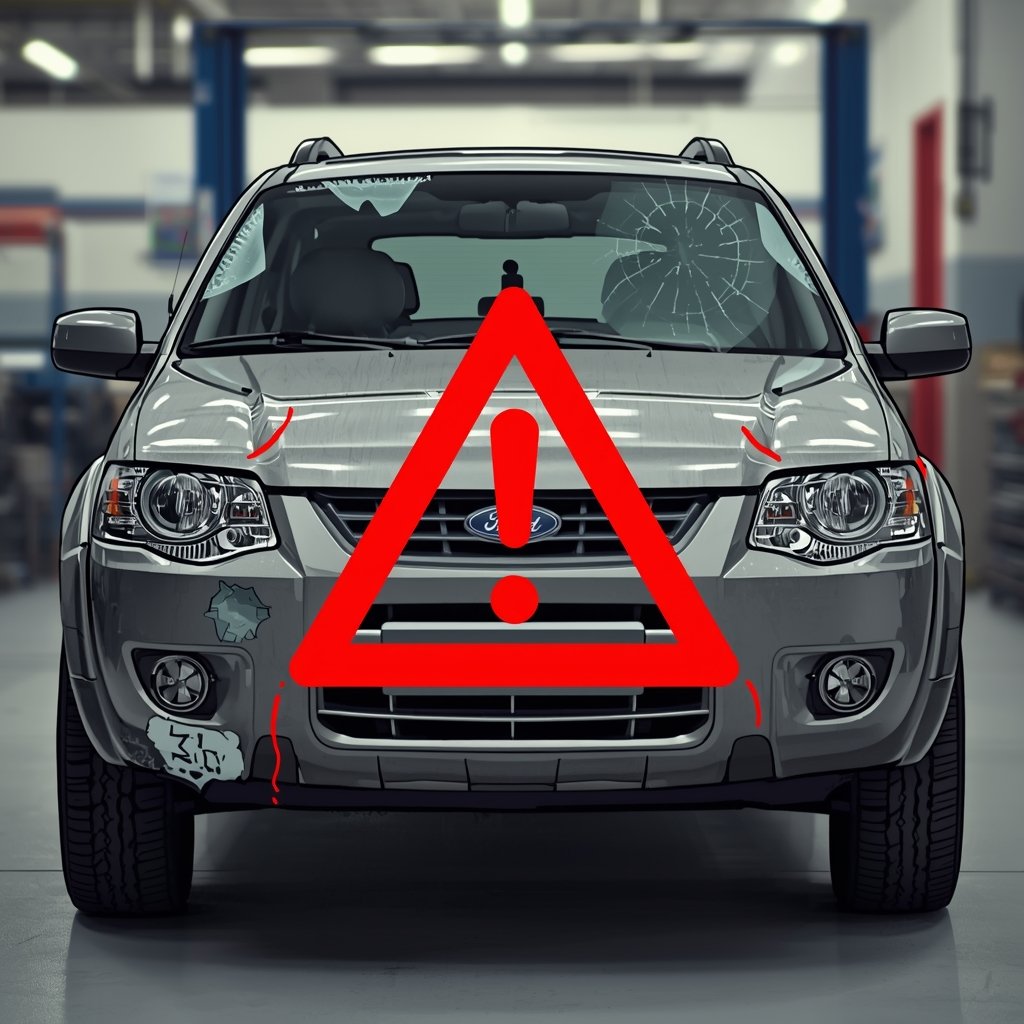
If you are researching the Ford Territory, the first thing to understand is that the name covers different vehicles in different markets. This article is focused mainly on the Australian-built Ford Territory sold from 2004 to 2016, because that is where the better-documented suspension issues, transmission-related buyer concerns, and official Australian recall notices apply. Newer China-built Ford Territory models sold in other regions are different vehicles with different mechanical histories, so problems and recall information are not interchangeable by name alone. (CarsGuide)
Editorial note: This guide is for general information and is not a substitute for a professional inspection.
The more useful way to look at the Australian Ford Territory is this: it can still make sense as a used family SUV, but only if you buy carefully. The biggest things to check are front suspension wear, official recall completion, and signs of transmission or cooling-system trouble on affected drivetrains. That is a stronger and more trustworthy framing than treating every Territory as either flawless or doomed. (CarsGuide)
Scope note before you judge any Territory
For this guide, “Ford Territory” mainly means the Australian SX, SY, and SZ generations. That matters because the most commonly discussed used-buying issues — especially front ball-joint wear and Australian recall campaigns — are tied to those locally developed vehicles rather than to later overseas models that reused the Territory name. (CarsGuide)
Front suspension wear is one of the main used-buyer checks
On the Australian Territory, front-end wear is one of the most commonly discussed inspection items. CarsGuide’s reporting and used-review coverage describe wear and failure of the front suspension ball joints as a significant issue on early Territorys, and Ford Australia acknowledged ball-joint wear concerns on early vehicles while offering inspection and replacement where required. CarsGuide’s 2010 reporting said every Territory built from early 2004 until the revised design introduced at the start of 2009 was covered by Ford’s inspection-and-replacement action, and Ford said a small number of customers had experienced ball-joint separation after significant wear. (CarsGuide)
That does not mean every Territory you inspect will have a dangerous suspension problem. It does mean front suspension condition should be treated as a core used-car inspection item, not a minor annoyance. Clunks over bumps, vague steering, uneven front-tyre wear, or steering that feels less settled than it should are all good reasons to have the front end checked properly before you buy. CarsGuide’s used review also linked the Territory’s front-suspension ball-joint wear to real buyer caution in the used market. (CarsGuide)
A practical inspection approach is simple: drive slowly over speed bumps with the radio off, pay attention to any front-end knocking, inspect the tyres for uneven wear, and have a workshop check for play in the ball joints, control arm bushes, tie rods, and wheel bearings if anything feels off. That is the kind of advice that adds more real value than simply repeating “ball joints are common.” (CarsGuide)
Australian recalls are a must-check, not a small detail
If you are buying an Australian Ford Territory, checking recalls by VIN is one of the fastest ways to avoid preventable risk. The Australian government’s Vehicle Recalls site and Ford Australia’s recall support pages are the correct places to verify recall status, and that check should happen before you decide the car is a bargain. (Vehicle Recalls)
There are three official Australian recall themes especially worth knowing:
Front brake hose recall (SX/SY).
Australian recall REC-003194 says some SX Territory and SY Territory vehicles could develop a front brake-hose leak under certain operating conditions. A brake-fluid leak is not a cosmetic issue — it is a braking-system issue that should be treated seriously. (Vehicle Recalls)
Ignition connector / engine stall recall.
Australian recall REC-001572 says that on some affected vehicles, the ignition switch electrical connector could disengage. The recall warning says that if the connector disengages while driving, the engine can stall, electrical functions can be lost, and the vehicle may be unable to restart. (Vehicle Recalls)
Unintended downshift into first gear (output shaft speed sensor).
Australian recall REC-000300 says some affected SZ Territory vehicles could experience an intermittent output shaft speed sensor failure that may result in an unintended downshift into first gear. The official recall notice warns that this could cause abrupt wheel-speed reduction and potentially loss of vehicle control. (Vehicle Recalls)
The safe takeaway is straightforward: do not assume recall work was done just because the vehicle has changed hands a few times or because the seller says it was “looked after.” Run the VIN and ask for documents. (Vehicle Recalls)
Transmission and cooling-system checks matter on used examples
Another reason the Australian Territory needs careful buying is that transmission-related failures can be expensive. CarsGuide’s used review of the 2005–2009 Territory says the six-speed ZF transmission can be troublesome and costly to fix, and it specifically recommends checking that the gearbox shifts smoothly and without hesitation on a test drive. (CarsGuide)
CarsGuide’s broader Territory reliability coverage also describes a well-known failure mode where coolant contamination can destroy the transmission, often described informally as a “milkshake” failure. While that nickname is familiar in owner circles, the approval-safer way to explain it is this: if you see milky contamination in the cooling system, harsh shifting, or delayed engagement, that is not something to dismiss casually. It deserves proper inspection before purchase. (CarsGuide)
That is why a sensible used-buyer check includes looking at coolant condition, making sure the transmission shifts cleanly both cold and warm, and treating any sign of fluid contamination or driveline hesitation as a major inspection flag rather than a small bargaining point. (CarsGuide)
AWD models deserve an extra driveline check
If the Territory you are considering is AWD, it is worth paying extra attention to driveline feel. CarsGuide’s used review noted deterioration of the rear diff mounts as a common problem that can show up as a rear clunk when taking off or braking. That does not automatically mean the whole AWD system is bad, but it does mean any clunk, backlash, or driveline shunt on take-off deserves closer inspection. (CarsGuide)
A more useful test drive on an AWD Territory includes low-speed full-lock turns, smooth pull-aways from a stop, and steady motorway driving to check for clunks, shudder, or driveline vibration. That kind of road test is far more valuable than a short drive around suburban streets. (CarsGuide)
A more practical used-buyer checklist
If you only do a few things before buying an Australian Ford Territory, make them these:
- Check Australian recalls by VIN using the official recall tools. (Vehicle Recalls)
- Inspect the front suspension carefully, especially ball joints and associated front-end wear items. (CarsGuide)
- Check the coolant and transmission behavior for signs of contamination or shifting trouble. (CarsGuide)
- On AWD vehicles, pay attention to rear driveline clunks or backlash. (CarsGuide)
- Do not treat a short, flattering test drive as enough evidence that the car is sound. (CarsGuide)
Frequently asked questions
Are Ford Territory ball-joint problems expensive?
The ball joints themselves are not always the most expensive part of the repair, but the cost can rise if the Territory also has worn bushes, alignment issues, or broader front-end wear. CarsGuide’s used review makes clear that front-suspension ball-joint wear was one of the most serious used-buyer concerns on early Territorys. (CarsGuide)
What is the most important thing to check on an Australian Territory?
For many buyers, the top priorities are front suspension condition, recall completion, and any sign of transmission or cooling-system contamination. That is a more useful checklist than asking for a single universal “worst problem.” (CarsGuide)
How do I know whether my Territory has an open recall?
Use the official Australian Vehicle Recalls site or Ford Australia’s recall support tools and check by VIN. If recall work was completed, ask for documentation rather than relying only on the seller’s memory. (Vehicle Recalls)
Bottom line
The Australian-built Ford Territory is not a vehicle to dismiss automatically, but it is one to inspect carefully. The strongest used-buyer concerns are well known: front suspension wear, official Australian recalls, and potentially expensive drivetrain issues if a neglected example is bought cheaply and blindly. CarsGuide’s long-running used coverage and Ford’s own recall history both support that more cautious view. (CarsGuide)
The smartest Territory is not the cheapest one. It is the one with the best front-end condition, the clearest recall history, and the fewest unanswered questions.
References
- Australian Vehicle Recalls — official recall search portal. (Vehicle Recalls)
- Ford Australia recall support and VIN lookup guidance. (Ford Australia)
- Australian recall REC-003194: SX Territory / SY Territory front brake hose leak. (Vehicle Recalls)
- Australian recall REC-001572: ignition switch electrical connector disengagement / engine stall risk. (Vehicle Recalls)
- Australian recall REC-000300: unintended downshift into first gear due to output shaft speed sensor failure. (Vehicle Recalls)
- CarsGuide report on Ford Territory ball-joint investigation and Ford’s free inspection/replacement action. (CarsGuide)
- CarsGuide used Ford Territory review (2005–2009) covering front ball-joint wear, transmission concerns, and rear diff mount clunks. (CarsGuide)
A few extra things to do on the page itself before republishing:
- Replace “Author: Gustavoblalmiras” with a real byline and real expertise.
- Add 2–3 internal links to your own genuinely useful pages, such as your used-car inspection guide, recall-check guide, and suspension-noise guide.
- Remove the giant raw URL code block completely.
- Keep the title in a cleaner format like “Ford Territory Buying Guide: What to Check Before You Buy” instead of another “problems” title.