
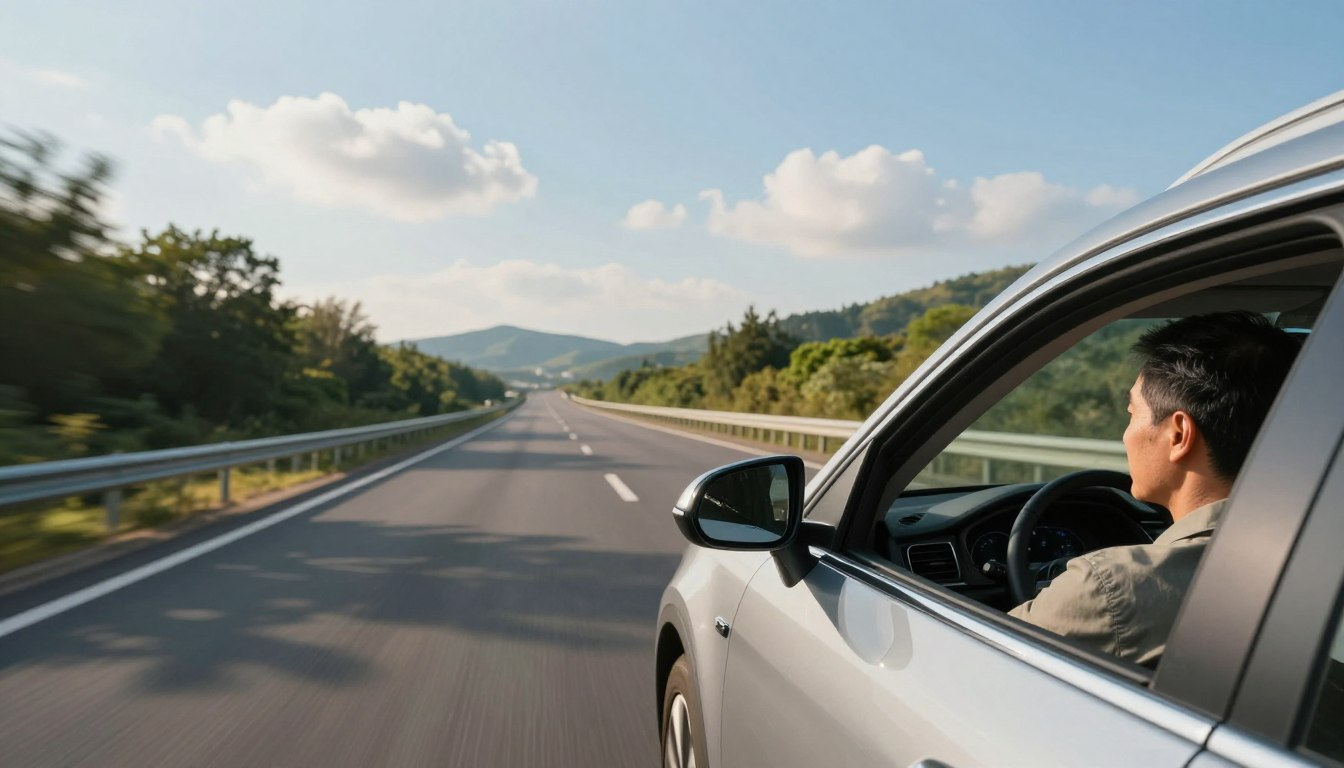
Cruise control can save fuel — but only when the road allows it. On flat motorways/highways, it helps you hold a steady speed, which reduces the small speed changes that quietly burn extra fuel.
The safety rule is simple: don’t use cruise control when grip or traffic can change suddenly (rain, heavy traffic, winding roads, steep hills). In those situations, manual control is safer and often more efficient too.
In this guide you’ll learn:
- the best speed-setting habits for fuel savings
- when to switch it off (the safety triggers)
- how to handle hills without wasting fuel
- how to measure savings on your own car
Quick rules (read this first):
- Use cruise control on flat, dry highways with light traffic
- Turn it off in rain/wet roads, stop-and-go traffic, construction zones, winding roads, and steep hills
- If you’re constantly tapping “+ / –” or braking, cruise control isn’t helping
| Best time to use it | Avoid using it |
|---|---|
| Flat motorway/highway | Rain / wet / ice |
| Long open stretches | Stop-and-go traffic |
| Light traffic | Steep hills / mountains |
| Dry conditions | Curves / winding roads |
| You can hold steady speed | Busy merges / short gaps |
The Relationship Between Cruise Control and Fuel Economy
What Is Cruise Control and How Does It Work?
Cruise control adjusts the throttle to keep your speed constant. When you turn it on, the system controls the throttle. It makes adjustments to keep your speed steady.
This is super useful on long drives where speeds don’t change much. You can control it with buttons or a lever on the steering wheel. This lets you set, adjust, or cancel the cruise control mode.
How to use cruise control for fuel savings (the simple method)

Get up to speed smoothly first (don’t “floor it” then lock cruise).
Set cruise slightly below your “temptation speed.” If you tend to drift faster, set 1–2 mph lower.
Avoid constant adjustments. If you’re hitting +/– every minute, just drive manually.
Leave more following distance. More space = fewer brakes = more fuel saved.
On gentle hills: let speed drop a little uphill and recover downhill (if safe). Forcing perfect speed on hills often wastes fuel.
Best times to use cruise control (and when to turn it off)

Cruise control works best when your speed can stay steady for minutes at a time. On a dry, open motorway/highway, it helps you hold a constant pace and (in most cases) saves fuel.
Use cruise control when:
- The road is dry and visibility is good
- Traffic is light and flowing (no constant braking)
- The route is long and predictable (motorways/interstates)
- You can set a speed and leave it alone (no “+ / –” every minute)
Turn cruise control OFF when:
- Wet roads / rain / ice (you may need instant speed changes if traction drops)
- Stop-and-go traffic or busy merges (you’ll brake often → no savings)
- Construction zones or areas with sudden lane changes
- Winding roads where speed needs frequent adjustments
- Steep hills / mountains where cruise keeps adding throttle to “fight” the slope
Hills without wasting fuel (simple rule)
Steep grades: switch to manual. Cruise often overworks the engine uphill and can feel pushy downhill.
Gentle rolling hills: it’s usually more efficient to allow a small speed drop uphill and recover downhill (as long as it’s safe and legal).
Does cruise control work the same on hybrids, EVs, SUVs, trucks? (quick notes)

Cruise control can save fuel, but it works differently for each vehicle. Knowing how your car responds to cruise control is key. Look at the engine, weight, and aerodynamics of your vehicle.
Differences Between Gas, Diesel, and Hybrid Vehicles
Gas engines work well on flat roads with cruise control. Diesel engines have more power for hills. Hybrid cars use both engine and electric motor for better fuel use.
Some hybrids, a hybrid, uses advanced cruise control to save fuel.
Gas cars might speed up suddenly. Diesel engines keep speed steady uphill. Hybrid cars have eco-mode for better fuel use with cruise control.
SUVs vs. Sedans: Adjusting Your Approach
SUVs and sedans differ in shape and weight, affecting cruise control. Sedans are more aerodynamic, saving fuel. SUVs, though less aerodynamic, benefit from cruise control on long trips.
Adjust your cruise control based on your vehicle. For example, in an SUV like the Some SUVs, you might need to adjust speed more.
Truck and Heavy Vehicle Considerations
Trucks and heavy vehicles need special care with cruise control. Their size and weight affect speed and control. Downhill driving requires careful use of cruise control and engine braking.
Heavy vehicles take longer to speed up and slow down. Plan your cruise control use. Modern trucks, like the Some modern trucks, have advanced systems for different driving conditions.
Adaptive cruise control (ACC): can it save fuel or waste it?

Advanced cruise control technologies have changed how we drive. They make driving more efficient and safer. These innovations help save fuel and keep us safe on the road.
Adaptive Cruise Control Systems
Adaptive Cruise Control (ACC) systems keep a safe distance from the car ahead. They adjust speed automatically. This helps save fuel, which is great for long drives.
Eco-Cruise Features in Modern Vehicles
Eco-cruise features in modern cars aim to save fuel. They control the throttle and shift gears to use less fuel. Some systems even adjust for upcoming road changes.
Combining Cruise Control with Other Fuel-Saving Techniques
There are many ways to save on gas, not just cruise control. To get the best fuel efficiency, mix different strategies into your driving habits.
Proper Vehicle Maintenance for Optimal Efficiency
Keeping your car in top shape is essential. This means regular oil changes, proper tire inflation, and timely replacement of air filters. A well-kept vehicle uses less fuel and avoids breakdowns. For example, the right tire pressure can boost fuel efficiency by up to 3%.
| Maintenance Task | Frequency | Fuel Efficiency Impact |
|---|---|---|
| Oil Change | Every 5,000 miles | Improves engine efficiency |
| Tire Inflation Check | Monthly | Up to 3% improvement |
| Air Filter Replacement | Every 15,000 miles | Enhances engine performance |
Additional Tips for Fuel Efficiency
Driving habits also play a big role in saving fuel. Smooth acceleration and gradual braking help a lot. Also, taking off extra weight and using cruise control on long drives can save more fuel.
- Plan your trips to avoid traffic congestion
- Use cruise control on highways
- Remove extra weight from your vehicle
By using cruise control and these other tips together, you can save a lot on fuel and cut down on consumption.
Common Mistakes That Reduce Cruise Control Efficiency
Cruise control helps drivers keep a steady speed on long trips. This can make driving more efficient. But, some mistakes can undo these benefits.
Frequent Speed Adjustments and Their Impact
Adjusting the cruise control speed too often is a big mistake. It makes your car use more fuel because it speeds up and slows down a lot. To save fuel, keep the speed set and avoid changing it too much.
Improper Following Distance and Unnecessary Braking
Not leaving enough space between your car and the one ahead is another error. It’s important to keep a safe distance when using cruise control. Also, braking when you don’t need to can hurt your fuel efficiency. It makes your car use more fuel because it has to speed up again.
What changes your results (wind, hills, traffic, speed, roof racks)
To see how well you’re saving fuel, it’s key to track your progress. This way, you can spot areas to get better and tweak your driving for more efficiency.
How to measure fuel savings in 2 minutes (no apps)
- Reset Trip A before a highway drive (cruise ON).
- Drive a similar route another day and reset Trip B (cruise OFF, same speed style).
- Compare average MPG.
Tip: wind matters — compare on similar weather days.
Interpreting Your Data and Making Adjustments
After you’ve gathered data on your fuel use, it’s important to understand what it means. Look for patterns, like when you use more fuel or on certain routes. Use this info to change your driving, like avoiding busy roads or keeping a steady speed. These tweaks can help you use less fuel and save on gas.
By following these steps and using the right tools, you can track your fuel savings well. This way, you can make smart choices to boost your fuel efficiency.
Real-World Fuel Savings: What to Expect
Using cruise control can save a lot of fuel, which is great for long drives. It keeps your speed steady, cutting down on fuel use and costs.
Average Savings by Vehicle Type and Driving Conditions
The fuel savings from cruise control vary by vehicle and driving conditions. SUV and truck drivers might save 10-15% on fuel on highways. Sedan and hatchback drivers could save 5-10%.
Driving in hilly or mountainous areas can change your savings. Cruise control might make your car work harder, using more fuel.
Cost Benefits Over Time for American Drivers
Using cruise control can save a lot of money over time. American drivers can save hundreds of dollars each year. For example, a driver who commutes 20,000 miles a year could save $100-200 by using cruise control.
This might not seem like a lot, but it adds up over time. It’s a big help for drivers who travel a lot. Making cruise control a habit can save you money and help the environment.
Conclusion:
Cruise control is a tool — not a fuel “hack.” Use it on flat, dry highways where it can hold a steady pace, and switch it off when conditions change (wet roads, traffic, steep grades). If you want the real answer for your car, do one quick Trip A vs Trip B test on a similar route — then you’ll know exactly when cruise helps, and when manual driving is better.
FAQ
1) Does cruise control always save fuel?
No. It helps most on flat highways. In traffic or steep hills, it can waste fuel because you brake/accelerate more.
2) What speed should I set for best MPG?
Use the highest speed you can hold smoothly and legally without frequent braking. If you’re constantly correcting, lower the set speed a little.
3) Is cruise control safe on wet roads?
Usually no. If traction changes suddenly, manual control helps you react faster.
4) Why does cruise control waste fuel on hills?
Because it tries to hold the exact speed by adding throttle uphill. On rolling terrain, a small speed drop is often more efficient.
5) Does adaptive cruise control save fuel?
Sometimes on open roads. In traffic it can brake and re-accelerate more than a calm driver, lowering MPG.
6) Why does cruise feel jerky sometimes?
Wind, hills, and aggressive tuning can make it “hunt” for speed. If it’s not smooth, drive manually.
some sources:
U.S. DOE (AFDC) – Gas-Saving Tips (Cruise control): https://afdc.energy.gov/files/u/publication/howtodrivesmartfinal.pdf
AAA (Auto Club Group) – Do’s and Don’ts of Driving in Rainy Weather (Don’t use cruise control): https://newsroom.acg.aaa.com/aaa-dos-and-donts-of-driving-in-rainy-weather/